
Book Your EICR London Certificate - NICEIC Approved
Ensure Your Property Meets UK Electrical Safety Standards with Our EICR Test London – at £129, Same-Day Certificates!
- BS 7671–compliant EICR inspections.
- NICEIC-approved electrical specialists.
- Accepted by councils, agents, and insurers across London.
UK-Compliant EICR Testing (BS 7671)
Instant Digital
Reports
Any Property Type Covered
Get Your Instant Quote
Electrical Installation Condition Report · NICEIC approved
Select your property type
How many beds does your property have?
Please provide your contact details
Quotation Sent Successfully
We've sent your EICR quote to:
your email
Please check your email. A senior compliance specialist will call you within 1 working hour to confirm your inspection on your selected date.
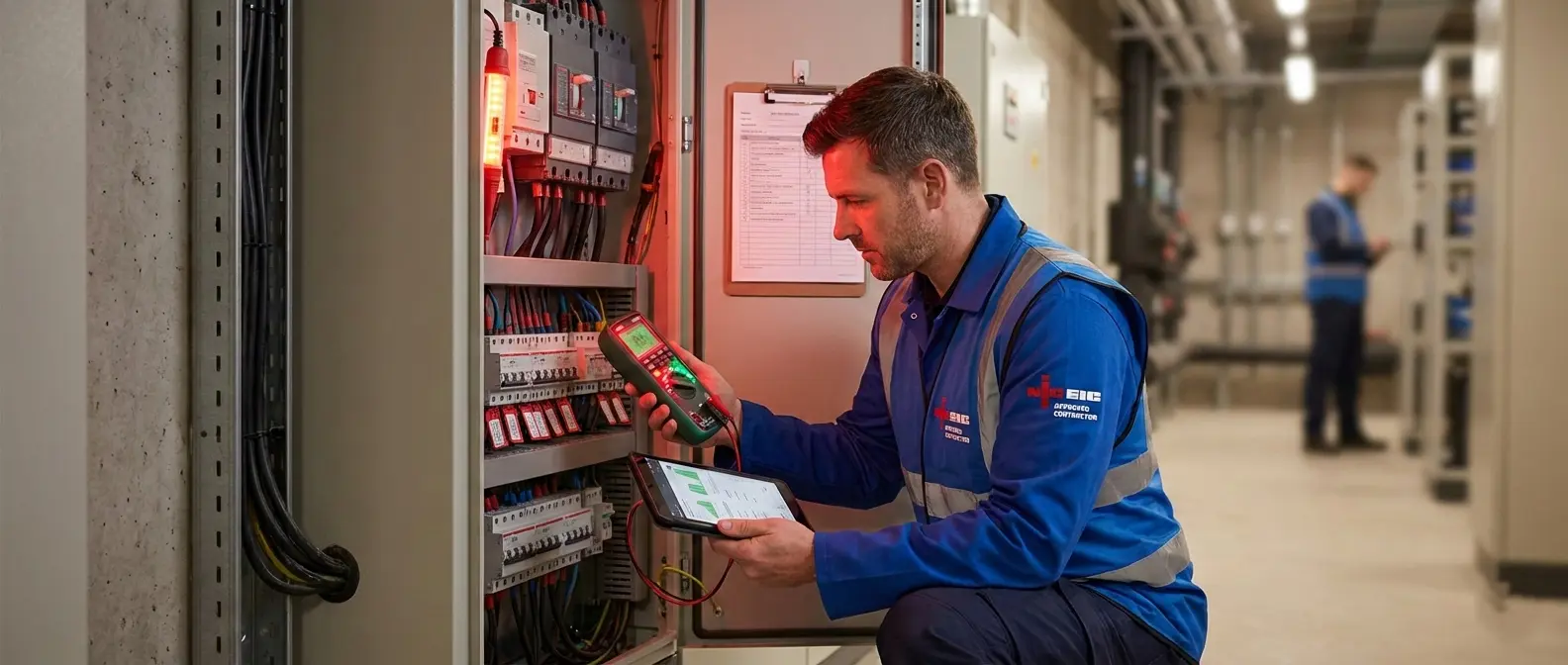
How London Landlords Stay Fully Compliant
Why London Landlords Choose Our EICR Checks
The Guarantee Only We Offer
- Accurate hazard identification
- BS 7671:2018 compliant inspections
- BS 9792:2025 reassessment
- Follow-up inspections within 12 months
- Transparent, no-hidden-fee pricing
- Guidance on remedial work
Qualified Electrician Qualifications Nearby
- Napit, NICEIC-certified electricians
- Domestic, commercial & HMO properties
- Part P – Building Regulations compliant
- Circuit, socket, and wiring checks
- Detail Reports with urgent & recommended actions
Fast Turnaround & Compliance Pricing
- Flexible scheduling
- Rapid inspections, minimal disruption
- Transparent, competitive rates
- Certificates delivered promptly
- Clear compliance recommendations
Includes: Inspection, Report, 24h Delivery, Follow-up
What is an Electrical Installation Condition Report and Why do I need one?
An EICR is a safety check of the fixed electrical system in a property. The inspection covers wiring, sockets, circuits, and the consumer unit. An Electrical Installation Condition Report London inspection helps landlords confirm safety, meet legal duties, and protect people living in the property.
- Finds electrical faults and damage
- Checks wiring and fixed electrical parts
- Highlights fire and electric shock risks
- Confirms compliance with BS 7671
- Records landlord safety responsibilities
- Lists clear actions for any issues
- Accepted by councils, insurers, and lenders
"Without a valid EICR, landlords risk fines and safety problems. A current report helps keep the property safe and protects you under the law.."
Understanding the purpose of an EICR for safety and compliance
The purpose of an EICR is simple. It confirms that the electrical system is safe and suitable for continued use.
- Identifies unsafe or worn electrical parts
- Reduces risk of fire and electric shock
- Supports tenant safety
- Helps landlords meet legal duties
- Proven through an EICR certificate in London
Why an EICR Matters for Landlords
With an EICR certificate landlord London, you can show that your electrical systems are safe and meet legal standards.
- Checks wiring, sockets, and circuits for safety
- Finds issues that could cause fire or shocks
- Gives a clear plan to fix any problems
- Keeps your property and tenants protected
- Provides proof for legal and insurance purposes
BS7671 EICR Standards Explained
EICR inspections follow recognised UK electrical safety rules.
- Based on BS 7671 wiring regulations
- Sets rules for inspection and testing
- Uses C1, C2, and C3 safety codes
- Ensures clear and consistent reporting
Understanding EICR Legal Requirements for UK Landlords
Keeping rental properties safe with proper electrical checks is part of the law in the UK. An Electrical Installation Condition Report shows that the wiring and fixed electrics in a home are safe.
Key Dates For EICR Compliance
A simple timeline helps landlords follow the rules.
Key Requirements:
- July 1, 2020: All new tenancies need an EICR before the tenant moves in.
- April 1, 2021: All existing tenancies need an EICR.
- Every 5 years: Electrical systems need a re-test, or sooner if the inspector says so.
- At every tenancy change: A new EICR must be done, even if the old one is still valid.
How Local Councils Enforce The Rules
Breaking the rules can lead to trouble.
Key Requirements:
- Who checks: Local council housing teams check compliance.
- Fines: Up to £30,000 per breach, with more fines for multiple properties.
- Triggers: Tenant complaints, inspections, or accident investigations.
- Trend: More councils are inspecting properties in 2024 and 2025.
New Tenancy EICR Rule Explained
New tenants bring new requirements.
Key Requirements:
- Critical point: A new EICR is needed even if the old report is still valid.
- Reason: Safety responsibility moves with the tenancy.
- When to do it: The new report must be done before the tenant moves in.
Understanding EICR Codes and What They Mean for Your Property
C1 Code – Danger Present (Immediate Action Required)
- A dangerous fault is present that poses a serious risk of injury or fire.
- Action: Must be fixed immediately before the installation is used.
C2 Code – Potentially Dangerous (Urgent Remedial Works Needed)
- A fault that could become dangerous if not addressed quickly.
- Action: Arrange repairs as soon as possible.
C3 Code: Improvement Recommended
- No immediate danger, but improvements are advised to enhance safety.
- Action: Plan improvements when convenient.
FI Code: Further Investigation Needed
- Part of the installation could not be fully inspected or assessed.
- Action: Arrange further investigation to identify any hidden issues.
EICR Remedial Works: What Happens If Your Property Fails?
EICR remedial works fix these issues so your property meets safety standards and legal requirements.
Common Issues Found During EICR Testing
During an EICR, electricians may find issues such as:
Faulty or damaged wiring
Broken sockets or switches
RCDs (safety devices) not working
Overloaded circuits or loose connections
These faults are usually marked with C1, C2, C3, or FI codes, showing how urgent the repair is.
Cost and Timeline for EICR Remedial Works
The cost and time depend on how serious the problems are.
- Small repairs, like fixing a socket, take a few hours and cost less.
- Bigger repairs, like rewiring, take longer and cost more.
- Usually, minor fixes finish in 1 day, major repairs can take up to 5 days.
Re-testing After Repairs Are Completed
The re-test confirms the property is safe and meets legal requirements.
- Re-testing usually happens immediately after repairs.
- A new EICR report is issued confirming the system is compliant.
Our EICR Certificate Costs Across London
The cost of an EICR certificate in London depends on the size of your property. But ALC covers EICR at an affordable price. Take a look:
Domestic
£129/Up to 3 Bed
What’s Included
- Full Electrical Installation Condition Report (EICR)
- Inspection of fixed wiring and consumer unit
- Circuit testing and safety checks
- Clear digital certificate
- Fast 24–48 hour report delivery
Commercial
£250/Up to 10 Circuit
What’s Included
- Commercial EICR inspection
- Circuit and distribution board testing
- Visual and live electrical checks
- Full written compliance report
- Fast certificate delivery
EICR, Gas Safety and EPC combined
£277
What’s Included
- Landlord legal compliance covered
- One booking, one visit, all certificates
- Certification trusted by local authorities
- Qualified and fully insured engineers
How We Inspect Your Electrical System – A 6-Step EICR Procedure
Let’s take a look at our step-by-step EICR procedure, ensuring your electrical installation meets BS 7671 standards
Professional EICR Testing Near You Across London
We are based in London and have deep knowledge of local properties. Our team responds quickly, usually within 24–48 hours.
EICR in Central London
Response
24 h Express
inspected
340+
- Westminster
- City of London
Specialism
Expertise in protecting historic and listed properties in Central London with thorough safety assessments
EICR in East London
Response
24 h Express
inspected
287+
- Hackney
- Tower Hamlets
- Newham
- Waltham forest
- Redbridge
- Barking & Dagenham
- Havering
- Greenwich
Specialism
High-rise safety solutions and EWS1 compliance with detailed inspection reporting
EICR in North London
Response
24 h Express
inspected
280+
- Camden
- Islington
- Barnet
- Enfield
- Haringey
Specialism
HMO safety and Victorian property compliance including full landlord certification guidance
EICR in West London
Response
24 h Express
inspected
215+
- Kensington & Chealsea
- Hammersmith & Fulham
- Richmond Upon Thames
- Brent
- Harrow
- Hillingdon
- Hounslow
- Ealing
Specialism
Domestic & Commercial Electrical Inspection covering all large-scale property requirements.
EICR in South London
Response
24 h Express
inspected
415+
- Southwark
- Lambeth
- Lewisham
- Bromley
- Kingston Upon Thames
- Croydon
- Wandsworth
- Merton
- Sutton
- Bexley
Specialism
Modern urban developments and mixed-use property safety with expert compliance advice
Other Related Services
Pat Testing
Ensure all your portable appliances are safe and compliant with quick, reliable PAT testing across your property.
Learn more→
EPC Certificate
Get a professional Energy Performance Certificate to show your property’s energy efficiency and meet legal requirements.
Learn more→
Gas Certificate
Certified engineers inspect your gas appliances and systems to issue a compliant gas safety certificate for your property.
Learn more→
FAQs - EICR
How often should electrical installations be tested?
Keeping your home or rental property electrically safe means checking the wiring and system regularly to prevent shocks, fires, or other hazards.
- For homes you live in, the wiring gets checked every 10 years.
- For rented properties, landlords have it checked every 5 years or before a new tenant moves in.
EICR certificate how long does it take?
The time depends on how big the property is and how complex the wiring setup can be, because each circuit needs careful testing.
- The electrician usually spends 1 to 4 hours checking everything.
- The certificate is given the same day or within a few days.
Do I need an EICR for every new tenancy?
Yes. Every time a new tenant moves in, the landlord must show that the property is electrically safe so the tenant can move in without risk. A valid EICR is required for each new tenancy.
How long is an EICR report valid for?
The report tells you the safety of the system at the time of inspection and gives guidance on when the next check should happen.
- In rented properties, it lasts for 5 years.
- If remedial work is done, validity may depend on the type of work.
What does an EICR check involve?
The inspection looks at every part of the electrical system to find damage, wear, or safety risks, and includes tests that measure how well the circuits are working.
- Check wires, sockets, switches, and the consumer unit.
- Look for damage, wear, or risks like exposed wires.
- Test earthing and bonding.
- Measure insulation resistance and circuit safety.
When did EICR become mandatory?
The government introduced rules that made landlords responsible for proving that their rental property is electrically safe.
- New tenancies in England required an EICR from 1 July 2020.
- Existing tenancies had to comply by 1 April 2021.
How do I get an EICR certificate?
Only a qualified electrician or registered electrical contractor can perform the inspection and issue a legally valid certificate.
- They inspect the property.
- They provide a certificate or report showing the results.
Does an EICR test every socket?
The inspection focuses on key circuits and representative sockets to make sure the system is safe overall without testing every single outlet.
- A sample of sockets and circuits is checked.
- The goal is to make sure the system is safe overall.
Is EICR and PAT testing the same?
No. EICR and PAT testing both check electrical safety, but they look at completely different parts of the property’s system.
- EICR checks fixed wiring and the overall electrical system.
- PAT testing checks plugged-in devices and appliances.
When do I need an EICR?
An EICR is needed any time there is a reason to confirm the electrical system is safe, such as a new tenancy, old wiring, or after any major electrical work.
- Before a new tenant moves in.
- Every 5 years for rented properties.
- After electrical faults, safety concerns, or major work.
How often should an EICR be carried out?
Regular testing keeps properties safe and ensures compliance with the law, which helps prevent accidents or legal issues.
- Rented properties: every 5 years.
- Owner-occupied properties: every 10 years.
Is EICR a legal requirement for landlords?
Yes. Landlords have a legal duty to ensure that their rental properties are safe from electrical hazards, and EICR provides official proof of compliance. In England and Wales, a valid EICR is required for rented properties.
Accreditation & Certification





At All Landlord Certificates, we follow the highest standards in the electrical industry to keep you safe and satisfied. Our team works closely with well-known and trusted organizations like NICEIC, ECA, City & Guilds, NAPIT, and ECS Certification. These partnerships mean we stick to the rules and deliver work you can count on.
We believe in doing every job right the first time. That means paying attention to every detail, using quality materials, and staying up to date with the latest safety rules. Our electricians keep learning and sharpening their skills so that your home or business stays safe and fully functional.
When you choose All Landlord Certificates, you get more than just a service. You get peace of mind knowing qualified experts handle your electrical work with care and professionalism. We make sure everything is safe, clear, and works smoothly, so you don’t have to worry.
Our commitment to quality and safety shows in every project we take on. Trust All Landlord Certificates for reliable, honest, and skilled electrical services you can depend on.
Ready to Keep Your London Property Safe? Book Your Compliance Check Today.
Get a professional EICR for your rental or home property. Fast, thorough inspections and clear reports.
- 100+ Five-Star Reviews
- BS 7671:2018 Certified Electricians
- 24-Hour Detailed Reports
- Transparent Pricing, No Hidden Costs
- Free Follow-Up Inspection
- Legal Compliance for Landlords