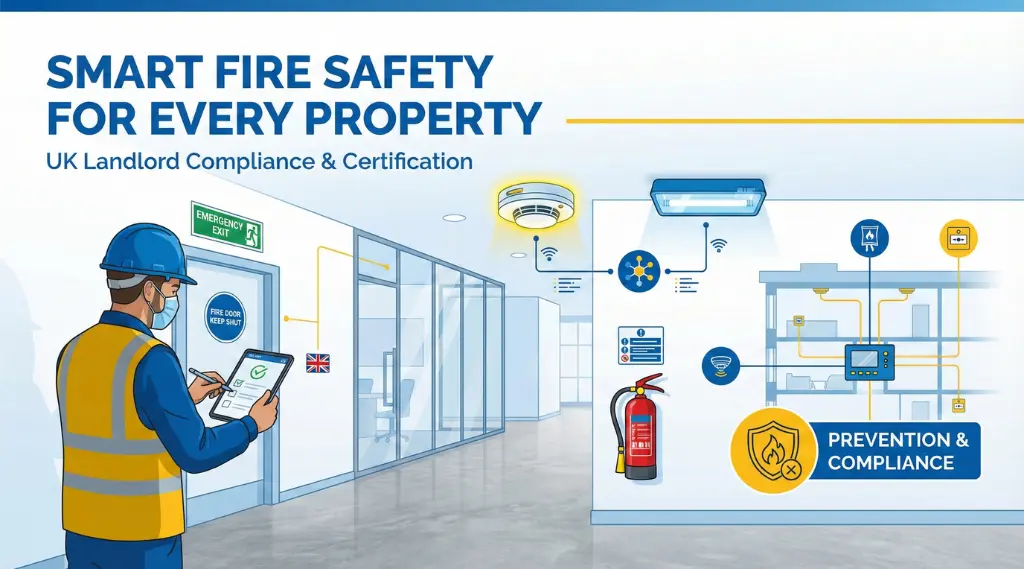

When was the last time you checked your property’s fire safety? Let’s have a quick chat about fire safety. Fires can start in a blink, and the right preparation can save lives, property, and even your business. One of the best ways to stay safe is by following the steps in fire risk assessment. This helps you spot hazards, understand risks, and plan actions to keep everyone safe.
Here’s a case that shows you what happens when fire assessments are not used properly. On 9 August 2018, a fire started in a building on Queensway, West London. Flats sit above a shop. Smoke fills the stairs and traps two women. The owner, John Kyriakides, had no fire risk assessment, no alarms, and no evacuation plan. He is fined £20,000 and gets a suspended prison sentence.
That’s why, in this blog, we discuss proper fire safety risk assessment steps. By the end of this blog, you will understand what a fire risk assessment is, why it matters, and the steps of fire risk assessment.
What Is a Fire Risk Assessment and Why Does Your Business Need One?
A fire risk assessment is a check of your workplace to see where fire can start and how it can affect people and property. It gives a clear plan to prevent fires and keep everyone safe. Every business in the UK must carry out this assessment under the Regulatory Reform (Fire Safety) Order 2005.
Understanding Fire Risk Assessment Requirements Under Current Regulations
That’s what every landlord needs to know. UK law says every business must carry out this assessment and keep it updated. It is a practical way to prevent fires and keep everyone safe. Here we talk about the key requirements in the UK:
Responsible person: The employer, owner, landlord, or manager must carry out the assessment.
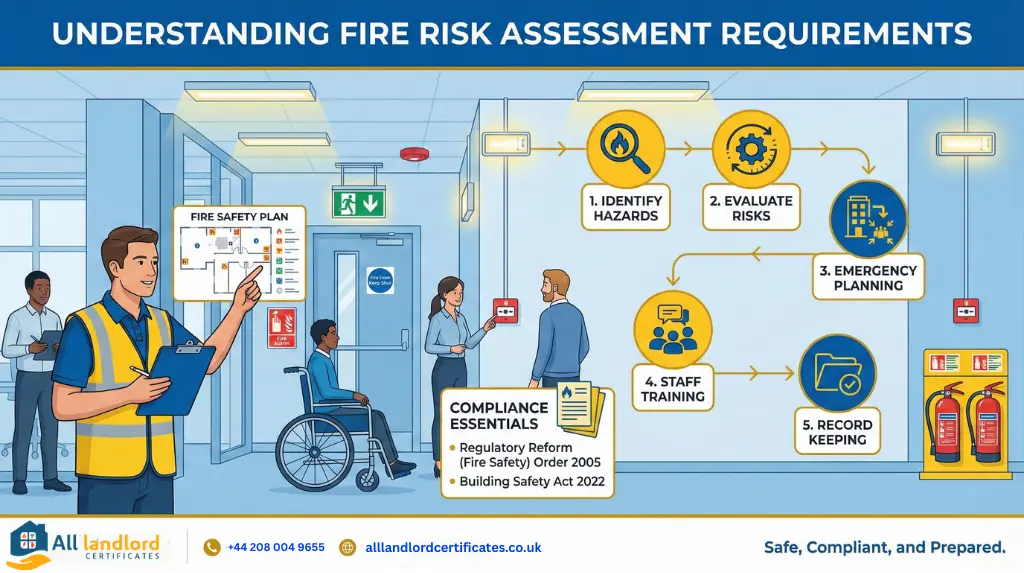
Identify hazards: Look for anything that can start a fire, make it spread, or block escape routes. Examples include electrical faults, machinery, cooking equipment, and flammable materials.
Identify people at risk: Employees, visitors, contractors, and anyone with limited mobility must be considered.
Evaluate and act: Check if existing safety measures are enough. If not, take steps to reduce risk.
Emergency planning: Make sure alarms work, escape routes are clear, and everyone knows what to do in case of fire.
Record keeping: If the workplace has five or more employees, the assessment must be in writing. Recent guidance under the Building Safety Act 2022 asks all businesses to record their fire risk assessment and safety arrangements.
Regular review: Update the assessment when something changes, like building layout, staff numbers, equipment, or use of flammable materials.
The Regulatory Reform Fire Safety Order 2005: Your Legal Obligations
The Regulatory Reform (Fire Safety) Order 2005 (FSO) is UK law that makes “responsible persons” legally responsible for fire safety in non-domestic premises. This law applies to all non-domestic premises in England and Wales. If you fail to follow these rules, you will face heavy fines, jail time, or both. Take a look at the main duties:
Carry Out a Fire Risk Assessment
Identify fire hazards, evaluate the risk to people, and decide what measures to take to reduce risk. Keep the assessment up to date.
Plan and Implement Fire Safety Measures Install and maintain fire detection and warning systems Provide fire-fighting equipment such as extinguishers Maintain fire doors and escape routes Ensure emergency lighting works
Keep Escape Routes Clear
All exits and escape routes must be free from obstruction and clearly signed.
Provide Staff Training and Information
Train staff about fire risks, evacuation procedures, and how to use fire safety equipment.
Make an Emergency Plan
Have a plan for safe evacuation, including designated fire marshals if necessary.
Maintain Records
Document fire risk assessments, staff training, and equipment maintenance.
Cooperate with Enforcement Officers
Allow fire authorities to inspect premises and provide necessary information.
Building Safety Act 2022: Key Responsibilities Explained
In this section, we talk about the Building Safety Act 2022. After 2005, more regulations were added and updated to make buildings safer. These rules work to protect people and property. Under this Act, if you own, manage, or are responsible for a building, then you have clear duties:
Who it applies to: Primarily for “higher-risk buildings”: residential buildings over 18 meters / 6 storeys, including flats. Duty holders include: building owners, landlords, developers, and building managers.
Main responsibilities: Safety case and management: Prepare a safety case demonstrating that the building is safe. Maintain a building safety management system. Manage risks from fire, structural failure, and other hazards.
Resident engagement: Provide clear safety information to residents. Ensure residents can report safety concerns.
Building control and oversight: Cooperate with the Building Safety Regulator. Allow inspections and provide the requested documents.
Dutyholder accountability: Ensure competent persons carry out safety-critical work. Keep records of design, construction, and maintenance for the building.
Construction and refurbishment obligations: Comply with new Gateway procedures for design, construction, and occupation. Follow strict construction standards and safety checks.
Enforcement and penalties: Breaches can lead to fines, criminal liability, or civil claims.
Why Are Risk Assessments Important for Workplace Safety?
Let’s talk about risk assessments and why they matter for your workplace. The steps of a fire risk assessment guide you through checking everything from exits to alarms. Key benefits include:
Protect employees and visitors. Prevent accidents and injuries. Keep your business safe and legal. Show your team that safety comes first.
Is a Fire Risk Assessment Required by Law in the UK?
Ever wondered if you really need a fire risk assessment for your property? In the UK, the short answer is yes. Fire safety law applies to all types of property and workplaces. Because it’s a legal obligation to protect people and property.
Fire Risk Assessments Legal Requirements for Different Property Types
Many landlords ask us, are fire safety rules the same for all types of property? The honest answer is no.
Fire risk assessment commercial – keeps offices, factories, warehouses, industrial units, shops, retail units, and shopping centers safe for staff and visitors. Fire risk assessment HMO – checks shared areas and living spaces in houses in multiple occupation to protect tenants. Fire risk assessment residential blocks – looks at communal areas, stairways, and the main structure in blocks of flats, apartments, sheltered housing, supported living, and shared residential homes. Fire risk assessment hospitality – protects guests in hotels, hostels, guest houses, B&Bs, and serviced apartments, focusing on sleeping areas, shared spaces, and escape routes. Fire risk assessment care homes – ensures residents in care homes, nursing homes, and medical centers stay safe, especially those who need extra support. Schools, colleges, universities, and nurseries – keep children and students safe with clear procedures and escape routes. Community buildings – include halls, libraries, places of worship, theaters, museums, and leisure centers, protecting visitors and staff. Mixed-use buildings – cover properties that have both residential and commercial areas, checking each part for fire safety.
BS 9792:2025 Standards and Compliance Guidelines
BS 9792:2025 is the new British Standard for fire risk assessments. The goal is to make each step easy to follow so you understand what to check and how to record it. This standard guides you through key parts of fire safety, such as:
clear escape routes. safe use of alarms. lighting for emergency areas. fire equipment in the right places. people inside the building and their needs. simple notes that record each finding.
Who Is Responsible for Conducting Fire Risk Assessments?
This is one of the most important steps in ensuring safety. The truth is, many people do not know who takes care of fire risk assessments. In the UK, a responsible person keeps the building safe from fire. The person responsible for fire safety depends on the type of building.
Examples of a responsible person: Business owner. Building owner. Landlord. Managing agent. Employer. Any person with control of the building.
This person has to: Arrange the Fire Risk Assessment. Keep the report safe. Act on every finding. Keep fire routes and equipment ready at all times.
Step 1: Identify Fire Hazards in Your Premises
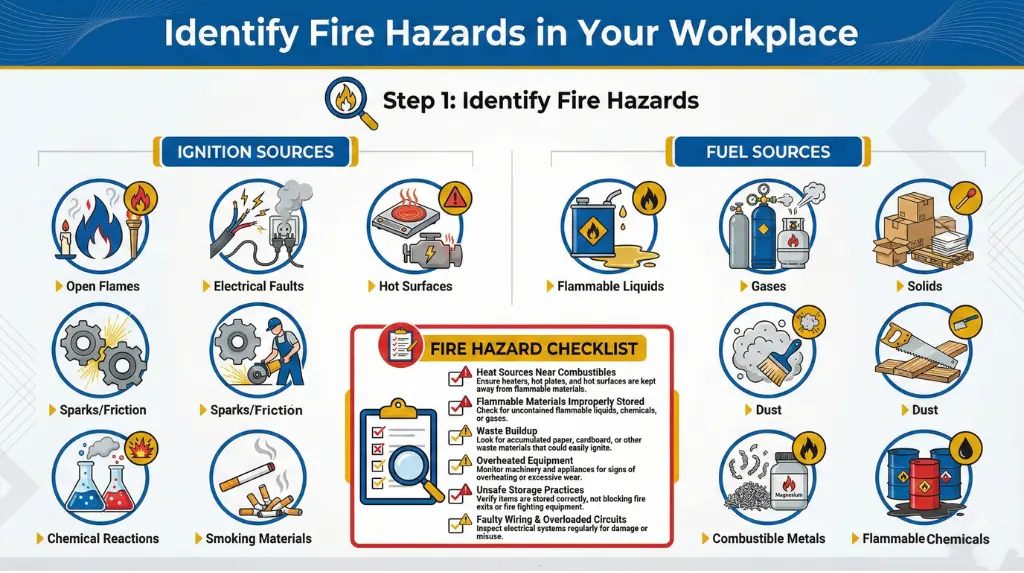
As you know, the 5 steps of a fire risk assessment. Identifying fire hazards is the 1st steps in fire risk assessment. Fire hazards are anything that can start a fire or help it spread. Finding these hazards is the most important step to keeping everyone safe and reducing fire damage.
Common Sources of Ignition and Fuel in the Workplace
That’s what each one needs to know, what can start a fire and what can burn. Fires happen when ignition sources meet fuels, so understanding both is key to keeping everyone safe.
Here are the most common ignition sources: Open flames: Gas burners, welding torches, pilot lights. Electrical equipment: Faulty wiring, overloaded circuits, or damaged appliances. Hot surfaces: Machinery, heaters, and engines. Sparks and friction: Power tools, grinding, or static electricity. Chemical reactions: Certain reactive chemicals can ignite spontaneously. Smoking materials: Cigarettes, lighters, and matches.
Common Fuel Sources: Flammable liquids: Gasoline, solvents, and paint thinners. Gases: Propane, acetylene, and hydrogen. Solids: Paper, wood, plastics, and textiles. Dust: Wood, grain, metal, or chemical dusts that can explode in the air. Combustible metals: Magnesium, aluminum, and titanium in powder or shavings. Flammable chemicals: Oxidizers and peroxides used in labs or industrial processes.
Using a Fire Risk Assessment Checklist for Hazard Identification
A fire risk assessment checklist helps you spot all potential hazards in your workplace. It keeps the process simple and ensures nothing is missed. Use the checklist to go through each area carefully and look for:
Sources of heat, sparks, or open flames. Flammable liquids, gases, or chemicals. Paper, cardboard, packaging, and other easily ignitable materials. Equipment that can overheat or cause sparks. Waste or rubbish that collects in corners or bins. Storage areas that increase fire risks.
Inspect every room, corridor, and storage area for hazards and record their locations.
Step 2: Identify People at Risk
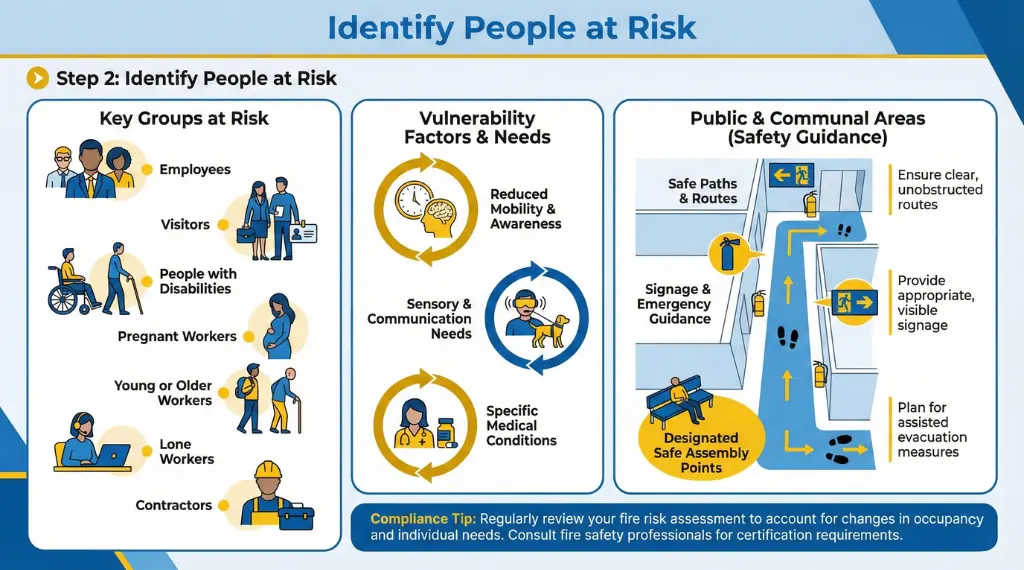
In these steps in fire risk assessment, check who faces danger. Include all people in the building, such as employees, visitors, and those with limited mobility. Think about where people gather and how a fire can affect them.
Assessing Vulnerable Individuals and Employees
In any risk assessment, it is important to identify people who face higher risks due to the environment or specific hazards. Keep track of who needs extra help and ensure they receive the proper guidance, support, or protection. This includes:
Employees who are new or still learning. People with health issues or disabilities. Pregnant employees. Workers who are very young or older. Employees working alone or in quiet areas.
Special Considerations for Public Areas and Visitors
As a responsible person, think about public areas for a moment. Visitors don’t know the place as you do, so it’s easy for them to get confused or hurt.
Keep an eye on things like: Children and older adults. Visitors who are unfamiliar with the area. Busy or crowded spots can cause slips or trips. Contractors, delivery staff, or one-time visitors who need directions or supervision.
Also, make public areas safer by installing clear signs, providing safe paths, and offering guidance. Fire protection begins with understanding the risk of fire and providing fire safety training. It is important to ensure the safety of people by following the key steps and the five steps, especially at risk. Review your risk assessment regularly and set up fire safety arrangements with the local fire and rescue service.
Step 3: Evaluate, Remove, and Reduce Fire Risks
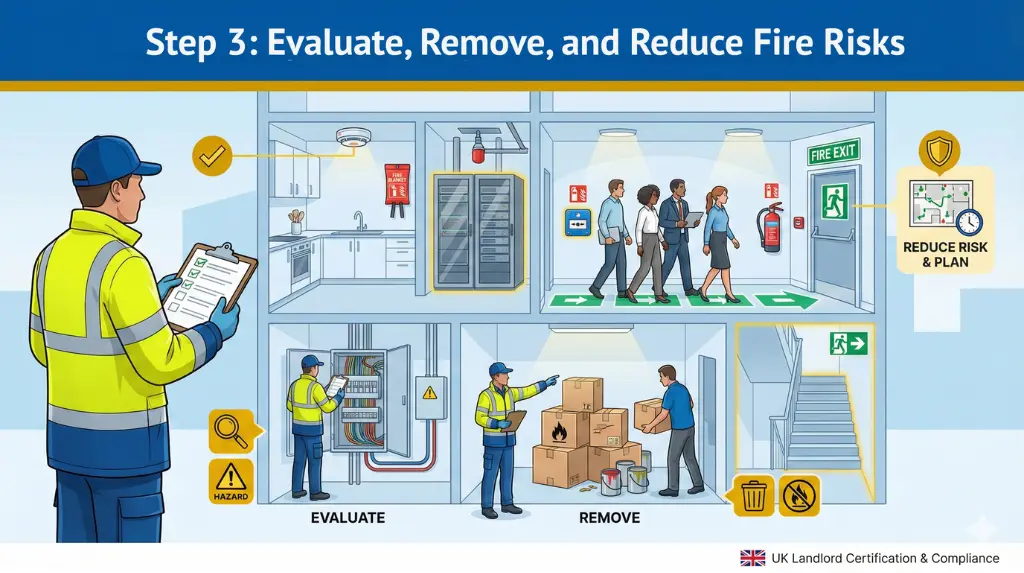
Fire safety for landlords involves inspecting the building for potential fire hazards, such as faulty wiring, flammable materials, or blocked exits. It also means helping tenants know what to do and where to go if a fire starts.
How Do You Carry Out a Risk Assessment Effectively?
Start by carefully looking at your workplace or building. Spot anything that causes a fire and think about how serious it can be. Also, check equipment, materials, and activities that can start a fire. Don’t forget to pay attention to areas that are less obvious, like storage rooms, kitchens, or electrical panels. Fire prevention helps reduce the fire from a small fire, and knowing the steps to fire ensures preparedness for any event of fire.
Implementing Control Measures and Safety Procedures
Once you know the risks, take action quickly to solve them. Simple steps can make a big difference in keeping people safe.
This means: Removing flammable materials from unsafe areas. Making sure fire exits are clear and easy to reach. Installing and maintaining fire alarms and extinguishers. Teaching everyone how to act safely if a fire.
The risk assessment process helps identify potential fire hazards and implement fire protection measures. Completing a fire with a written fire risk assessment ensures compliance with fire safety legislation and general fire precautions.
Fire Risk Assessment Requirements for Emergency Planning
A proper fire risk assessment is more than spotting hazards. It also helps you plan for emergencies. Fire safety is about being prepared and ensuring that everyone can exit safely.
This includes: Knowing who needs extra help to leave the building. Having clear escape routes and assembly points. Checking that everyone knows what to do in case of fire. Review the plan regularly and update it if anything changes.
Everyone has responsibilities for fire safety. Using a fire risk assessment template supports fire safety in the workplace. This is done under the guidance of the fire and rescue authority. Fire safety precautions maintain effective fire management, and a competent fire risk assessor ensures competent fire risk measures are in place.
Step 4: Record Your Findings and Emergency Plan+
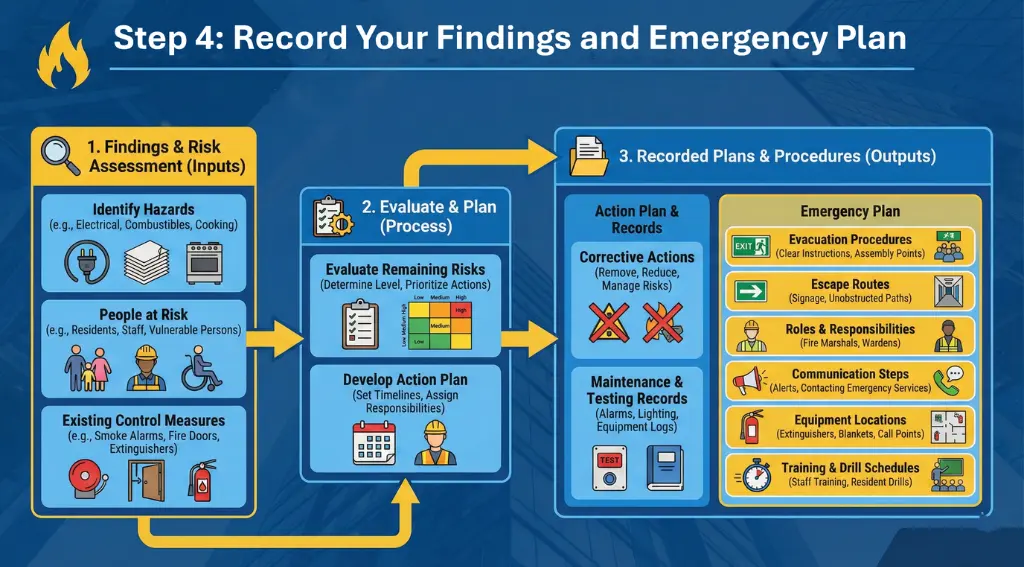
You know, these steps in fire risk assessment are really about keeping things simple and clear for everyone. By following this step, you keep track of hazards, check each area, and set clear actions for safety. Simple notes help you see what needs care and what feels safe.
Essential Documentation and Fire Risk Assessment Checklist Components
You keep clear and complete records for fire safety. You show all fire hazards, the people at risk, the safety measures in place, areas that need attention, and the actions taken. Take a look at that list you keep:
Identified fire hazards — sources of ignition, fuel, and oxygen. People at risk — including vulnerable individuals (elderly, disabled, visitors, contractors). Existing control measures — alarms, extinguishers, compartmentation, detection systems. Evaluation of remaining risks — areas where additional action is needed. Actions required — specific recommendations, timelines, and responsible persons. Maintenance and testing records — alarm tests, extinguisher checks, emergency lighting, drills. Training documentation — fire marshal training, staff inductions, and evacuation drills.
Creating an Actionable Fire Safety Plan
Your emergency plan turns your findings into simple steps that everyone can follow during a fire. A good fire safety plan has:
Evacuation procedures Primary and secondary escape routes Evacuation strategy (simultaneous, phased, assisted, etc.)
Roles and responsibilities Fire wardens/marshals Staff responsible for assisting vulnerable persons Persons in charge of calling emergency services
Communication procedures How alarms are raised How information is shared with staff and visitors Instructions for Non-Employees (Contractors, Customers, etc.)
Location of equipment and safety features Firefighting equipment (extinguishers, blankets) Alarm call points Assembly points Emergency lighting and signage
Training and drills Frequency of fire drills Induction processes for new staff Refresher training schedules
Contingency actions Procedures for equipment shutdowns Actions for high-risk areas Steps if the primary evacuation route is blocked
Step 5: Review and Update Your Fire Risk Assessment
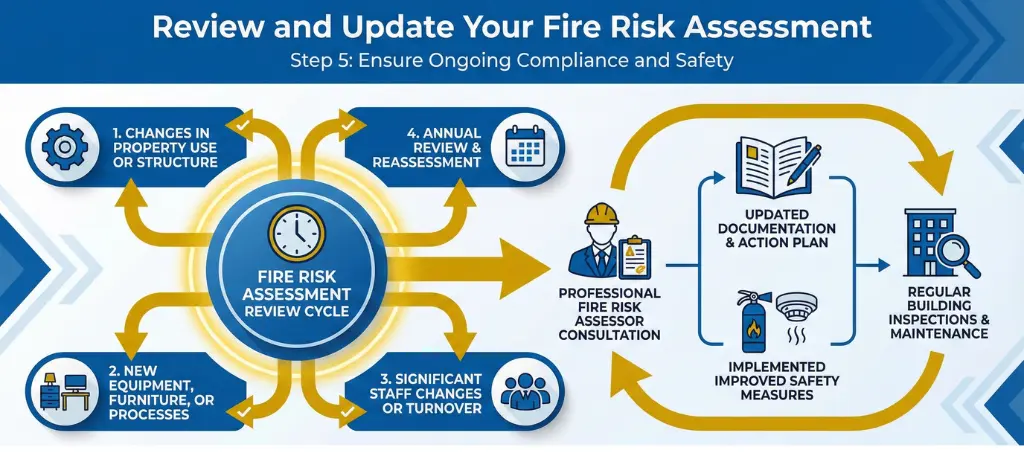
Let’s talk about how you can review your fire risk assessment. Start by looking at any changes in your building, new equipment, or staff updates. Even small changes can create new risks.
When Should Fire Risk Assessments Be Reviewed?
As a landlord, you are always worried about how often should fire risk assessment be reviewed. Let me answer that.
Check your assessment when something in the building changes Review after adding new equipment or furniture Update if you hire more staff or change how people use the space Go over it at least once a year to keep it up to date Watch for small changes that can create new risks
Working with Professional Fire Risk Assessors
Thinking about getting some help? Risk assessment must be done by a professional risk assessor, especially for five or more people, and understanding of fire safety improves with advice from the fire sector federation. Fire safety regulations require a suitable and sufficient fire risk and a sufficient fire risk assessment.
Fire safety management confirms the assessment is no longer valid once improvements are made, and employers should employ a fire risk assessment to identify hazards and ensure the safety of people during any event of a fire.
How Much Does a Fire Risk Assessment Cost in London and Beyond?
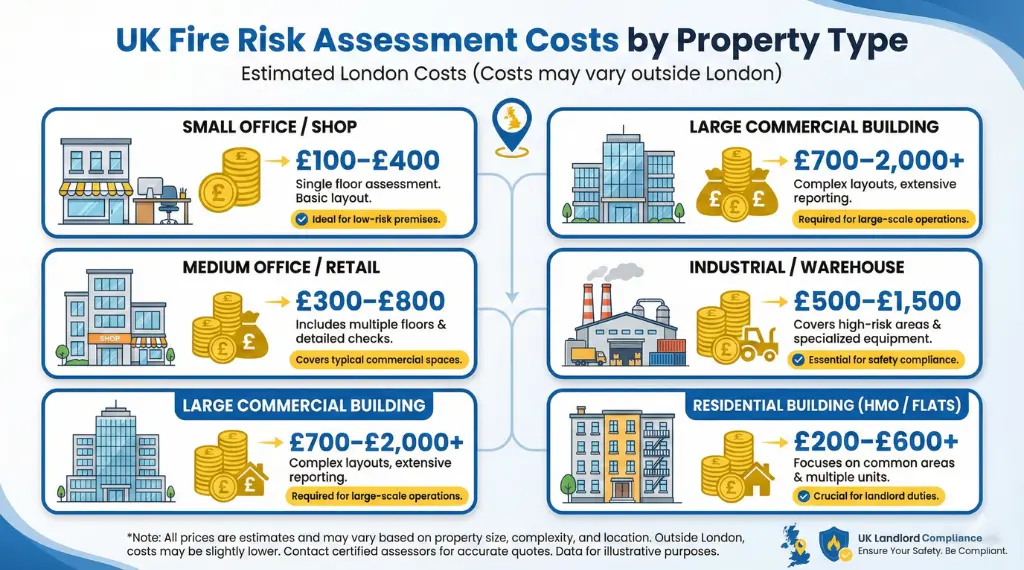
Alllandlordcertificates.co.uk provides a simple guide to the cost of fire risk assessments in London and other areas:
We also want to inform you that prices outside London can change slightly, but the process stays the same. Comparing a few options helps you get a fair price and good service.
Case Study
1. Grenfell Tower Fire Aftermath and HMO Fire Safety Impact
The Grenfell Tower fire in London in June 2017 claimed 72 lives and shocked the country. Even though it was not an HMO, it changed fire safety rules for all buildings where many people live, including HMOs. The UK government and local councils focused on making homes safer.
Key changes for HMOs include: Fire doors must have 30 minutes of fire resistance. All HMOs need interlinked smoke alarms. Councils carry out more fire risk checks and inspections. Cladding and escape routes get urgent safety upgrades.
Grenfell shows how important it is to follow fire safety rules. These changes help protect lives and keep HMO properties safe.
Source: UK Government Grenfell Inquiry Reports
2. Reading Borough Council Fire Safety Enforcement on HMO Landlords
In 2018, Reading Borough Council fined a landlord after finding serious fire safety breaches in a multi-storey HMO. The inspection revealed broken smoke detectors and fire doors missing self-closing devices and smoke seals. The landlord was also operating without a valid HMO licence.
Key points from the case: Several fire doors lacked self-closing mechanisms and smoke seals. Smoke detectors were broken or missing in bedrooms. The landlord did not have a valid HMO licence. The landlord pleaded guilty and was fined £2,500, including costs.
This case highlights the importance of full fire risk assessments and following fire safety rules to protect tenants and avoid legal penalties.
Source: Reading Borough Council News
Final words
Let’s take a quick look back at everything we’ve covered. Following the steps in fire risk assessment makes fire safety simple and effective. You start by identifying hazards, then check who is at risk, put safety measures in place, record your findings, and review regularly. Each step builds a safer property and keeps you compliant with UK regulations.
For extra support, check out Alllandlordcertificates.co.uk. By following the 5 steps of fire risk assessment, you ensure your property is safe, compliant, and prepared for any unexpected incidents.