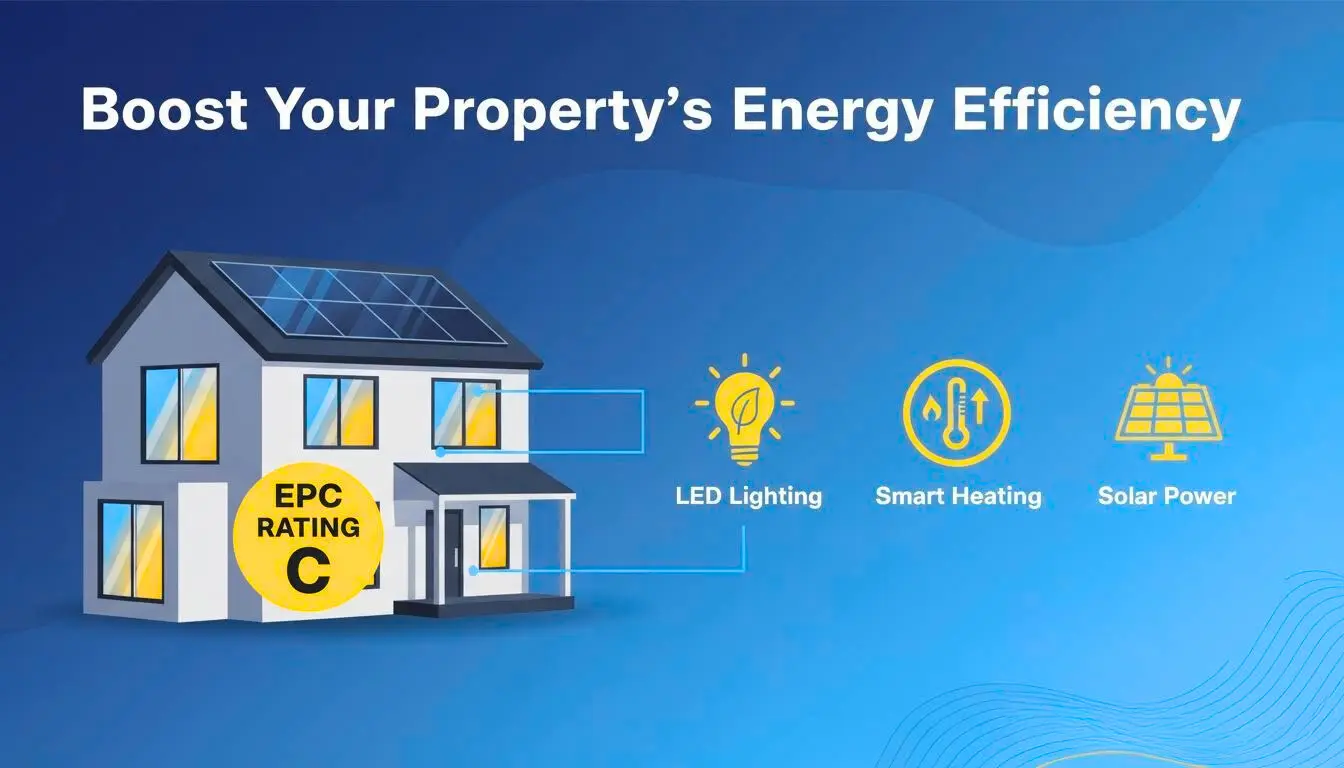
Do you ever wonder how your rental’s energy rating affects your tenants? These ratings show how much energy a home uses and how efficient it is. A good rating saves money, makes your property more appealing, and keeps you compliant with UK rules.
Let me share a real incident. Mr. Naveed from Bradford rented a property with an EPC rating of F. The council inspected the property and fined him £4,000. Because it didn’t meet the energy rules.
In this blog, we break down everything landlords need to know about energy ratings for rental properties. You’ll learn what the ratings really mean, the new 2025 rules you must follow, and simple ways to boost your property’s rating. Let’s get started!
What is an Energy Performance Certificate Explained for Landlords?
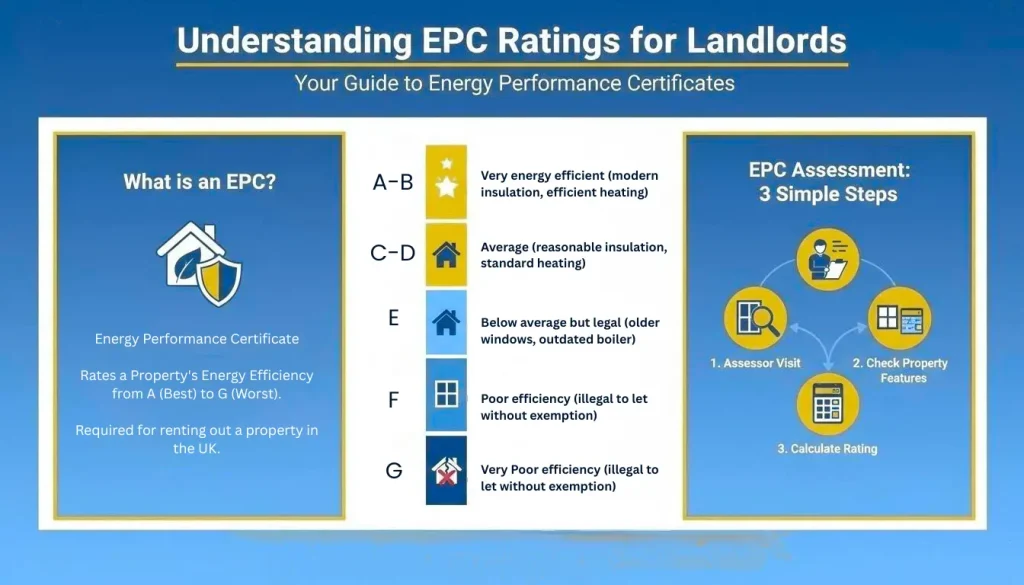
An Energy Performance Certificate (EPC) is a legally required document that shows how energy-efficient a property is. It gives the building an energy rating from A to G. For landlords, an EPC is essential when letting or selling a property.
Understanding EPC Ratings and What They Mean
In this section, we break down EPC ratings. Imagine them as a simple scoreboard for a property’s energy use. A higher score means lower energy bills, happier tenants, and compliance with regulations. For landlords, knowing the EPC rating for rental properties is essential to meet legal standards and attract tenants. Take a look at this list:
A–B: It means very energy efficient. Its features: Modern insulation Efficient heating systems Use of renewable technologies
C–D: It means average. Its features: Reasonable insulation Standard heating systems
E: It means below average, but legal to let. Its features: Older windows Outdated boiler Basic insulation
F–G: It means poor efficiency (illegal to let without exemption). Its features: Draughty property Poor insulation Old or inefficient heating systems
How Energy Performance Certificates Are Assessed
Let’s dive into how an EPC actually works. An energy performance certificate shows the energy rating for rental properties, but how do assessors figure that out? Here’s the process broken down:
The assessor visits the property and checks insulation, heating, windows, and doors. They look at the structure and see how walls, floors, and the roof hold energy. They check the heating and hot water systems including the boiler and radiators. They look at lighting and appliances to see if they save energy. They put all the details into approved software to work out the EPC rating. You receive the EPC with a rating from A to G plus tips to improve the home.
The whole point is to give landlords and tenants a clear picture of energy use. The higher the energy ratings for rental properties, the better for energy bills and staying compliant with UK law.
Differences Between Residential EPC Requirements and EPC Commercial Building
Let’s talk about EPCs and how they work for different buildings. When a property is up for rent, its Energy rating for rented properties matters a lot. The table below highlights the key differences between residential EPC requirements and EPC commercial buildings:
What are the new EPC regulations for landlords in 2025?
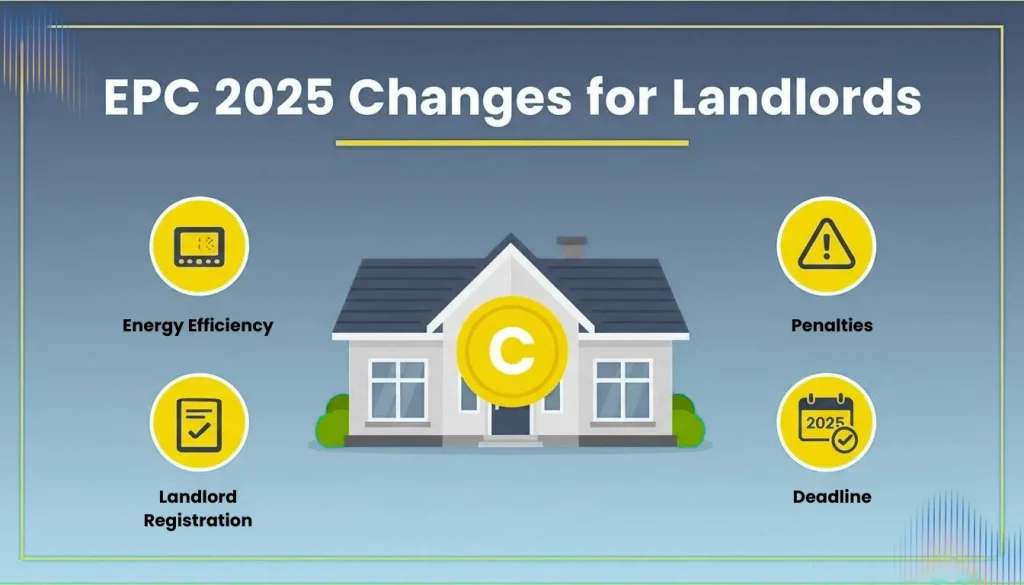
So, landlords, new EPC rules are on the way! Homes must meet higher energy standards using updated EPCs, checking heat retention, heating efficiency, and smart readiness. The Home Energy Model replaces SAP. Cost cap of £15k, possible 10-year exemptions, transitional rules, and fines up to £30k. All tenancies must comply by 2030.
Which rental properties are affected by the 2025 changes?
If you want a quick idea of which homes are affected by the 2025 changes, here is a simple starting point. Here is a clear list of the homes included:
1. Private Rented Sector (PRS) The Act applies to the private rented sector. These are residential properties that are rented out by private landlords (not social housing).
2. New and Existing Tenancies The reforms apply to both new and existing tenancies. So, it’s not future leases, many current tenants will also be covered when the transition happens.
3. Tenancy Type Fixed-term assured and assured shorthold tenancies will be replaced by assured periodic tenancies. That means no more fixed-term contracts in the traditional sense under this law.
4. Standards of Property Condition Properties in the PRS will need to meet a Decent Homes Standard, which is being extended to private lettings. Local councils will have powers to enforce housing quality (e.g., damp, mould, safety).
5. Energy Efficiency From 2025, newly let properties will need to meet a minimum EPC (Energy Performance Certificate) rating of C. This pushes up standards for many rental homes that are currently less efficient.
6. Landlord Registration Landlords will need to register their properties in a national Private Rented Sector Database. Without registration, landlords face penalties for renting out unregistered properties.
What deadlines and compliance steps must landlords follow?
So, landlords, some new rules come in with the 2025 changes. It will likely seem confusing at first. Following the steps on time keeps things smooth. Here is a simple guide to help you:
27 December 2025 Local councils gain stronger powers to inspect properties, request documents, and check compliance.
1 May 2026 Fixed-term ASTs change into periodic tenancies. Section 21 “no-fault” evictions end. Landlords must use specific legal grounds. Rent increases can happen only once a year, with at least two months’ notice. Rental bidding stops. Landlords cannot ask for more than one month’s rent in advance. Landlords provide a government “Information Sheet” to existing tenants by 31 May 2026. Landlords consider tenant pet requests within 28 days and give valid reasons if they refuse. Discrimination rules apply: landlords cannot refuse tenants because they have children or receive benefits.
Late 2026 Landlords register properties on the Private Rented Sector (PRS) Database. A PRS Landlord Ombudsman handles disputes.
Future Housing Standards A Decent Homes Standard applies to private rentals. Energy efficiency rules increase, aiming for EPC C by 2030 for most properties.
What penalties or consequences for non-compliance should landlords expect?
Energy efficiency for landlords improves homes, lowers bills, and keeps tenants happy. If landlords don’t follow rules properly, then as a landlord, you face:
You can pay up to £30,000 for each property.
Inspectors check homes and act if the rules are broken. Your name can appear on public lists. Homes with low ratings stay empty and are harder to rent. Banks refuse loans for homes with low energy scores.
How Much Does It Cost to Improve Different EPC Ratings?
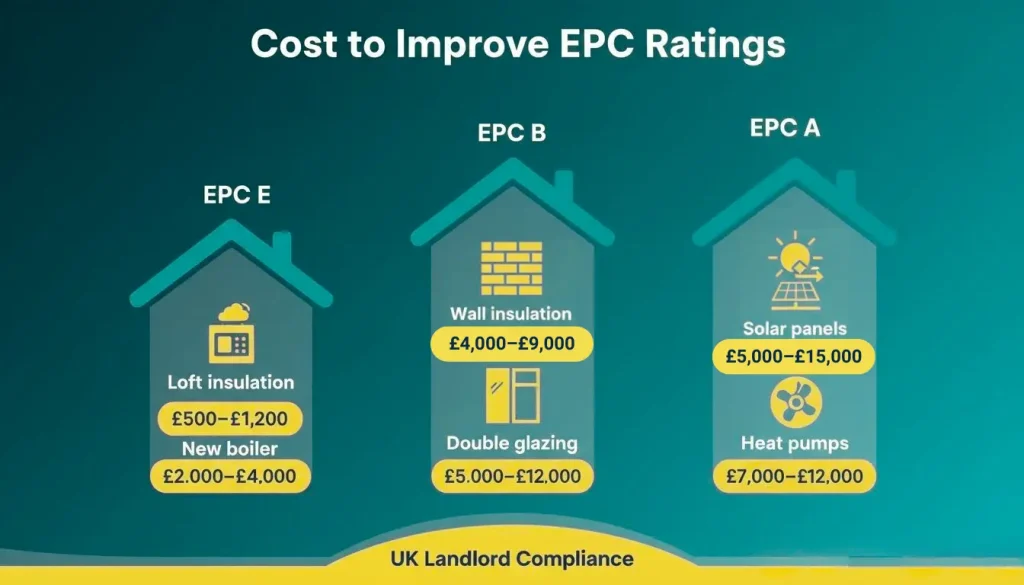
If you’re a landlord, understanding the energy rating for rental property is essential. Properties have different EPC ratings, and costs are also different. In this section, we talk about the cost of different upgrades based on your current rating.
EPC E Cost: Typical Upgrade Expenses
If your rental has an EPC rating E, it needs some key improvements. Things like better insulation, new windows, and an upgraded boiler make a big difference. Upgrading from an E rating can cost between £5,000 and £10,000. But it depends on the size and condition of your property. Let’s see what each of these costs:
Loft insulation: £500–£1,200 Wall insulation: £3,000–£8,000 New boiler or heating system: £2,000–£4,000 Draft proofing and small repairs: £200–£600
Budgeting for EPC Rating B Improvements
Thinking about getting a B rating? It needs a mix of insulation, heating, and some renewable energy options. Here is how to plan your budget so you get a good energy upgrade without spending too much.
Wall insulation upgrade: £4,000–£9,000 Efficient boiler or heating system: £3,000–£5,000 Double or triple glazing: £5,000–£12,000 Smart heating controls: £300–£600
Total cost for a B rating is around £10,000–£20,000. That depends on home size and starting point.
Achieving EPC A Rating: Is It Worth the Investment?
Getting an EPC rating A is the goal for many landlords. The cost is high, from solar panels to modern heating systems. Look at the price, the energy savings, and how many tenants value a green home. Take a look at the cost list:
Solar panels or battery storage: £5,000–£15,000 Heat pumps or advanced boilers: £7,000–£12,000 Full wall and roof insulation: £8,000–£15,000 High-quality triple glazing: £6,000–£12,000
What EPC Rating Do I Need for My Rental Property?
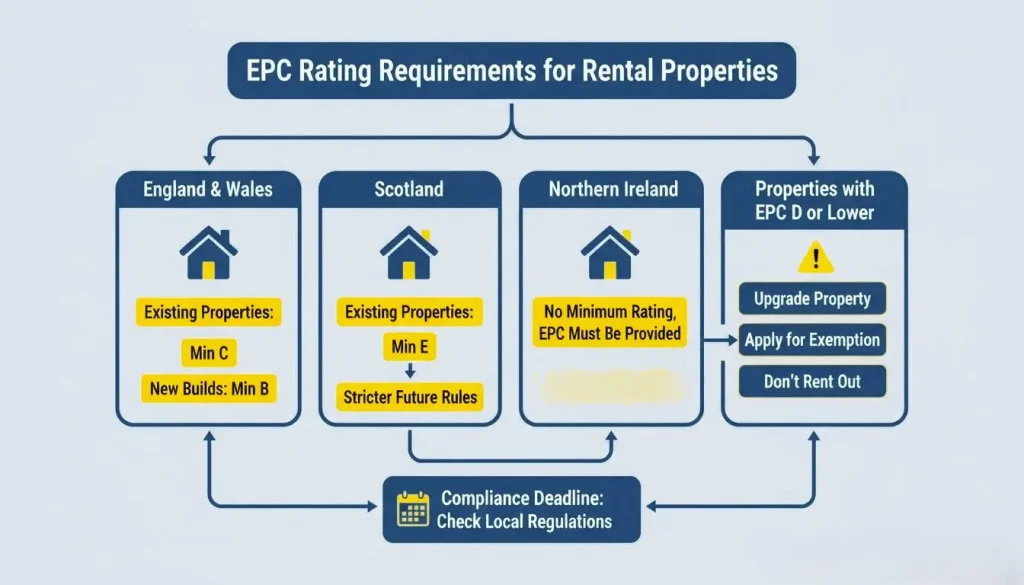
If you are renting out a property in the UK, you need to know about EPC ratings. In England and Wales, any rental property must have an EPC rating of at least C, or B if it is newly built. In Scotland, rental homes need a rating of at least E, and the rules will get stricter in the coming years. In Northern Ireland, landlords must provide an EPC for tenants, but there is no minimum rating required.
Understanding EPC Rating C for Rental Properties Requirements
If your property has an EPC rating of C, it means it handles energy really well. This can help tenants save money on their bills.
Benefits of EPC C: Compliant with current legal requirements. Makes your property more attractive to energy-conscious tenants. Potentially higher rent due to improved efficiency.
How to achieve EPC C: Install loft and cavity wall insulation. Upgrade boilers and heating systems to more efficient models. Install energy-efficient lighting and appliances. Consider double-glazing or improved windows if needed.
Energy efficiency regulations push every property owner to look at the energy efficiency of your property in a fresh way. With new energy efficiency rules and new energy efficiency ideas coming in, a valid epc gives a clear start point. If a property’s epc shows an epc rating below e, then improvements to your property and making energy efficiency improvements feel urgent.
Can I Still Rent with EPC D Rating or Lower?
If your property has an EPC rating of D or lower, you cannot rent it out like normal. The rules say it needs a higher rating to meet the law. Knowing what you can do makes it easier to keep renting safely.
EPC D: From 1 April 2025, you cannot legally rent out a property with an EPC rating lower than C unless an exemption applies. EPC E, F, or G: These are below the minimum standard. Renting out such a property without an approved exemption results in fines up to £5,000 for domestic properties (higher for commercial).
Possible exemptions: Significant improvements cannot be made due to technical or financial constraints. Listed buildings or protected structures. Temporary exemption granted while work is planned.
Many properties in England and wales and private rental properties try to achieve a minimum epc rating so they meet the minimum energy efficiency goals set by new regulations and efficiency regulations in the uk.
EPC Rating G: What It Means and Your Options
If your home has an EPC G rating, it uses a lot of energy, and heating costs are high. The place feels cold, and energy goes to waste. Take a look:
EPC G is the lowest rating, indicating very poor energy efficiency. Properties with this rating are unlikely to meet MEES.
Options for landlords:
1. Upgrade the property: insulation, efficient heating, and renewable technologies.
2. Apply for an exemption: Only if improvements are not feasible.
3. Do not rent until improved: To avoid penalties.
Minimum energy efficiency standards and meeting EPC rating C for rental properties
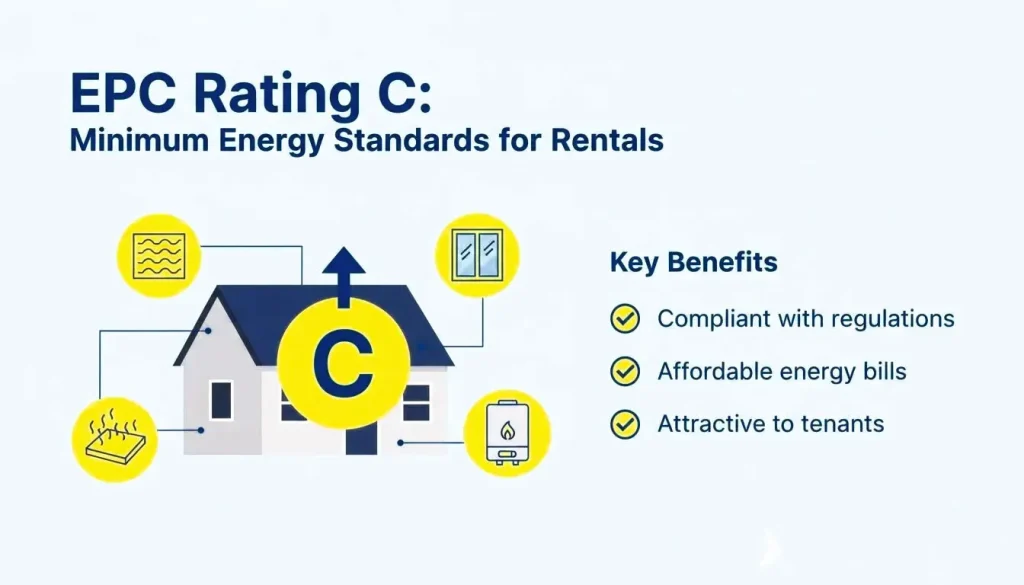
If you rent out a property, it has to meet minimum energy standards to keep it comfy and affordable. If you rent out a property, it needs to hit at least EPC rating C. This keeps the home comfy, affordable and meets the rules for renting. Energy ratings for rental properties help tenants understand how efficient a home is.
What are the minimum standards for residential EPC requirements in rentals?
Here are the key things landlords need to know:
Since 1 April 2020, a landlord cannot let a domestic private rented property if its EPC rating is F or G, unless there’s a registered exemption. The regulations that enforce this are called the Energy Efficiency (Private Rented Property) Regulations 2015. When improvements are recommended in the EPC report, “relevant energy efficiency improvements” are those that can be done for £3,500 or less (this is called the cost cap). If you make all those “relevant” improvements and your EPC is still below E, you can register an exemption. Local authorities enforce these rules. They can issue a compliance notice if you don’t follow MEES, and you face a financial penalty.
Rental properties in england follow epc requirements for rental properties that link closely to the minimum energy performance certificate. Some homes hold a current epc rating far from a c rating or the target minimum epc rating of c, so a property owner may get a new epc after upgrades.
Special cases: EPC commercial buildings converted to rental housing and compliance tips
If you take a commercial building (like an old office or shop) and convert it into homes, you need to pay attention to different rules:
For non-domestic (commercial) rented properties, MEES also apply. Since 1 April 2023, you can’t let out a commercial property if its EPC rating is F or G, unless an exemption applies. There is something called the “7‑year payback test”: if the cost of improving energy efficiency is too high compared to how much energy money you save in 7 years, you qualify for an exemption.
Some buildings are excluded. For example, listed buildings, places of worship, or industrial buildings with very low energy use not be covered.
What Are the Benefits of Higher Energy Ratings for Rented Properties?
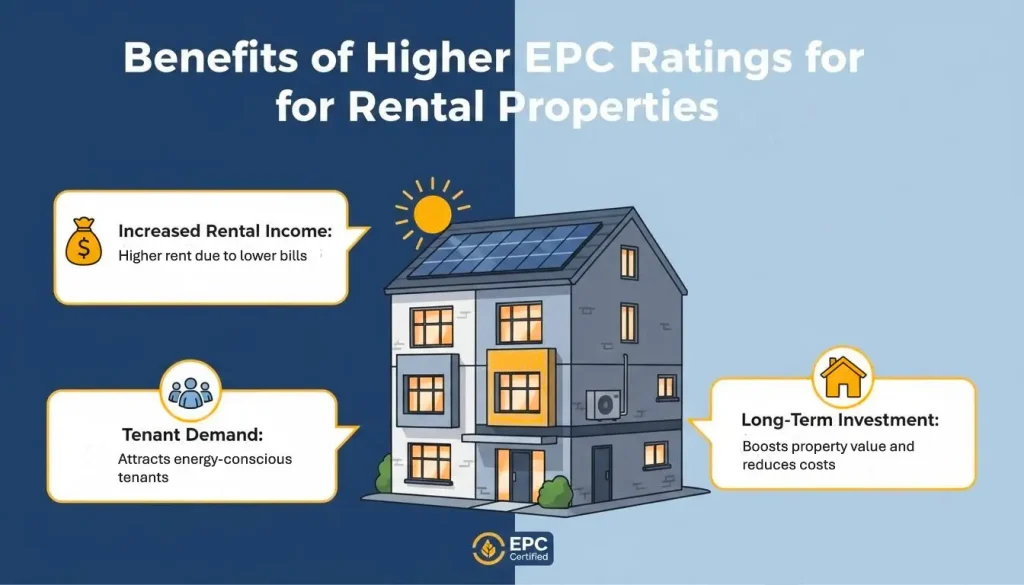
Let’s talk about why making your rental property more energy-efficient is worth it. They can make your property nicer for tenants, save money, and even boost your income. A better EPC rating shows that your property is comfortable, low-cost to run, and modern.
Increased Rental Income with Better EPC Ratings
You’ll be happy to hear that energy-efficient homes can bring in more rent. Here’s why:
Tenants love paying less on heating bills, so they’re happy to pay a bit extra for a home with EPC C or above. A higher EPC rating makes your property stand out from the crowd. Small upgrades now can make your rental more attractive and profitable in the long run.
Tenant Demand for Energy Efficient Properties
Let’s talk about tenant demand for energy-efficient homes. People are looking for properties that stay warm, feel comfortable, and keep energy bills low. Homes with better energy ratings attract families, young professionals, and anyone who wants a place to enjoy for a long time. When tenants feel happy and comfortable in a home, they stay longer, which means fewer empty rooms and more steady income for landlords.
Landlords try to ensure their properties stay ready for future updates and achieve a minimum that fits long term goals. With steady upgrades, each space starts to meet the minimum energy efficiency aims, improve the energy efficiency of your property, and create healthy homes that match modern expectations.
Long-Term Property Value and Investment Returns
Let’s think about how energy-efficient upgrades can change your property’s future. They make homes more appealing, reduce running costs, and grow your investment over time. Here’s how:
Homes with better EPC ratings hold their value better and can sell faster. Upgrades can increase your overall returns by lowering running costs and attracting higher rents. Making small improvements now can save big money later and keep your property in line with future UK rules.
For anyone working to meet the minimum epc rating for rental, the aim is clear. A home with a minimum epc rating of e or higher sets a base, but many targets push further so each place must achieve a minimum epc level set in new policy.
How to improve energy efficiency rating quickly and affordably
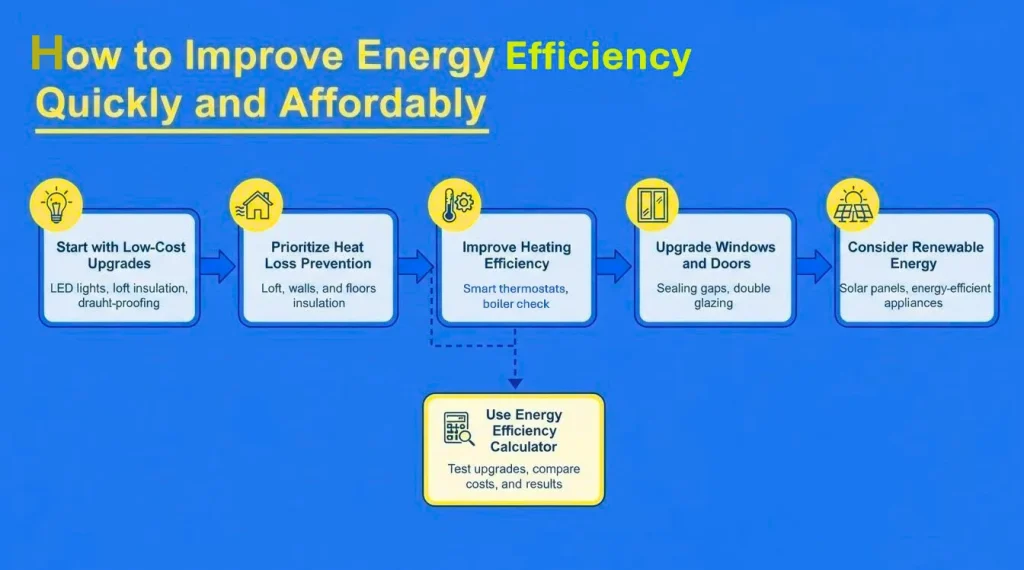
Getting your property to use less energy does not have to be expensive or complicated. A few smart changes can make a big difference for comfort, bills, and your energy rating.
What low-cost upgrades make the biggest difference?
Some simple changes can make a big difference without costing much. These upgrades improve comfort and reduce bills straight away. Focus on these first:
LED lights: Replace old bulbs with LED ones. They use much less electricity and last longer.
Loft insulation: Add padding in the attic to keep heat inside.
Draught-proof doors and windows: Seal gaps so warm air stays in.
Hot water cylinder insulation: Wrap your hot water tank to save heat.
Heating controls: Set timers and thermostats to use energy smartly.
How to prioritize improvements for older rental properties
Older rental homes have a lot of areas where energy escapes. Start with steps that make a clear jump in your energy score. Loft insulation and heating controls give the fastest results. Try this simple order:
Stop heat loss: loft, walls, and floors. Improve heating: check the boiler and add smart timers. Fix windows and doors: seal gaps or upgrade glazing. Switch lights and appliances to energy-saving options. Add renewable energy if the budget allows.
This guide for landlords helps explain how properties have a minimum energy target. How to achieve a minimum epc rating under energy efficiency rules for landlords. In some areas, wales must have an epc before a home goes on the market.
Using an Energy Efficiency Rating Calculator to Plan Improvements
These calculators help plan changes. They show how your home uses energy and where it loses heat. These calculators help plan changes:
Enter details about your home, like size, walls, heating, and windows. Test different upgrades to see the effect on energy rating. Compare costs and results to pick the best improvements. Make a step-by-step plan starting with cheap and high-impact changes, then add bigger upgrades later.
Wrap up
Let’s put it all together. They show how energy-efficient your home is, help you follow UK rules, and make your property more attractive to tenants. Checking your EPC and planning upgrades can save energy and money for everyone.
To get your property certified and make sure it meets the rules, visit Alllandlordcertificates.co.uk and order your Energy Performance Certificate today. A higher rating can help you attract tenants, reduce energy bills, and increase the value of your property.