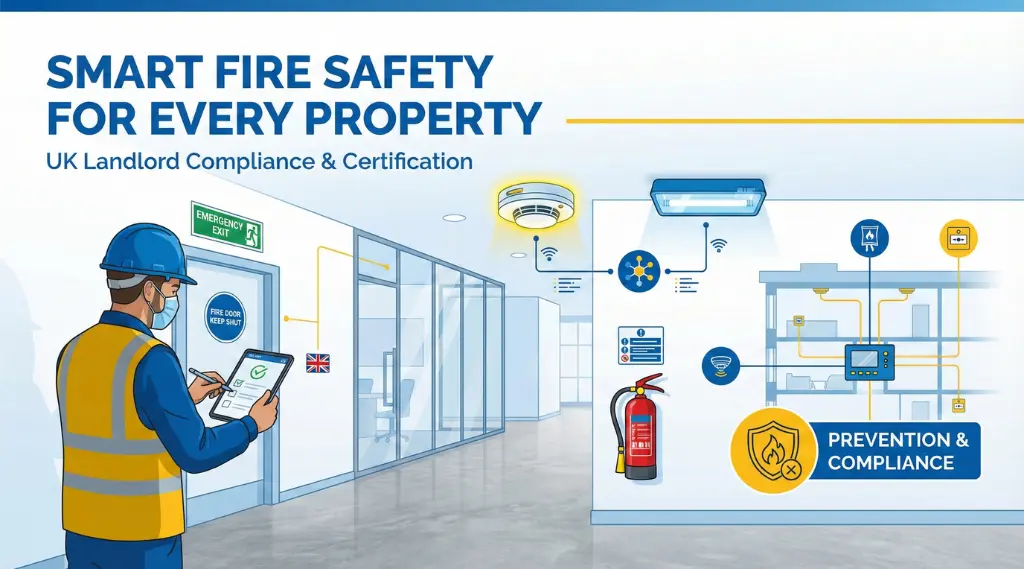
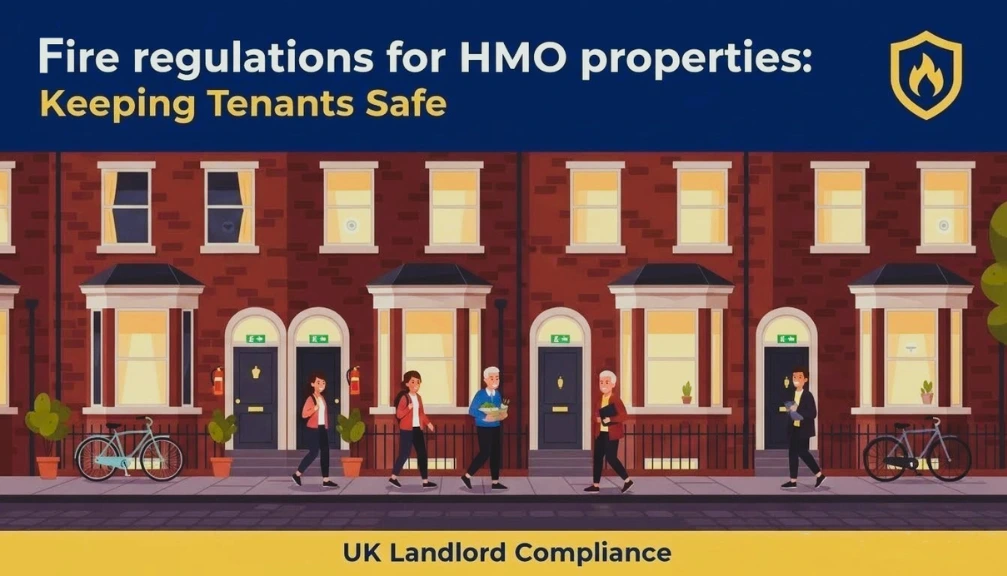
Ever wondered why fire safety matters in shared homes? Let’s dig into that. You hear the word HMO a lot in UK housing talk, and it brings a mix of questions for many renters and landlords. Because shared homes mean more people under one roof, more furniture, extra cooking, and many more. That is why Fire regulations for HMO properties are very strict and clear.
Let me show you a real incident why these rules matter. In March 2023, a two‑bedroom flat in Shadwell, East London, was licensed for three people but held 23 tenants. A faulty e‑bike battery started a fire. One tenant died from smoke inhalation. Investigators found serious safety breaches: overcrowding, no proper fire doors, and missing alarms. The landlords were fined over £90,000 for breaking housing and fire safety rules.
In this blog, we talk about what an HMO really means, why fire safety stands at the center of these rules, and what landlords must do under UK housing law.
What Does HMO Mean in Property and Why Fire Safety Matters
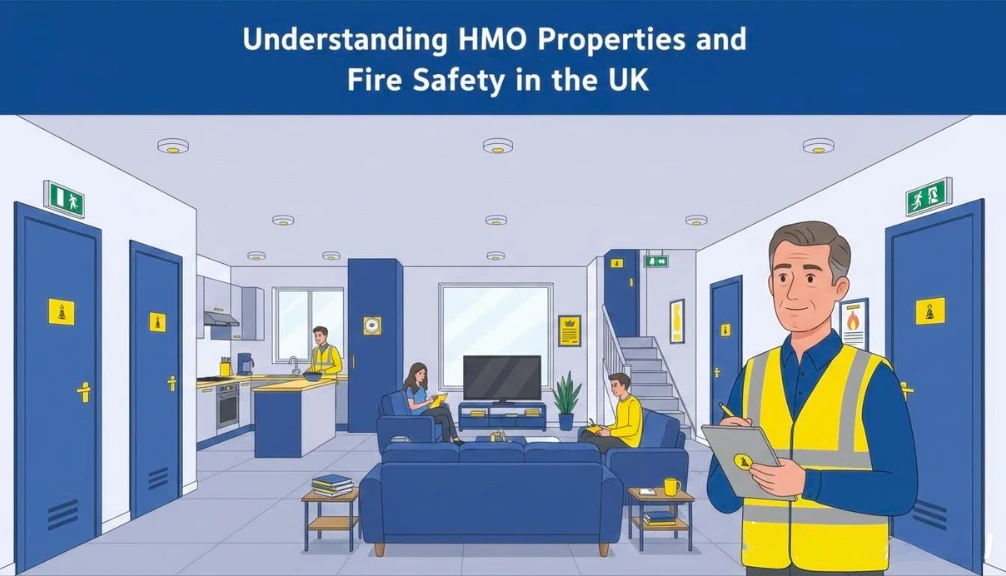
Let’s talk about what HMO means in property and why fire safety matters. An HMO is a home shared by people from different households. Fire safety regulations for HMO keep everyone safe with smoke alarms, fire doors, and clear escape routes under UK law.
Understanding HMO Classification and Legal Definitions
Let’s break down HMO classifications so it makes sense: Mandatory HMO: Property with five or more tenants forming two or more households. Licensable HMO: Smaller HMOs need a license depending on council rules. Additional HMO definition: Some properties need registration even if they are smaller.
Legal definitions appear in the Housing Act 2004. Councils inspect HMOs to ensure they follow fire safety and living standards.
Why HMO Properties Face Higher Fire Safety Requirements
Fire risks increase in HMOs because more people live under one roof. Here’s why HMO fire safety regulations are stricter:
Shared kitchens and bathrooms raise fire hazards. More people make evacuation trickier. Councils check fire doors, alarms, and escape routes. Fire safety plans and signage are needed.
That’s why UK law requires smoke alarms in bedrooms, fire alarm systems in larger HMOs, and clear exit routes to keep tenants safe.
Landlord Responsibilities Under UK Housing Regulations
Being a landlord of an HMO comes with serious responsibilities. Following fire regulations HMO property keeps tenants safe and makes sure you stay on the right side of the law.
Here’s what landlords need to do:
Smoke and carbon monoxide alarms: Every bedroom needs a working smoke alarm. Larger HMOs require a full fire alarm system. Carbon monoxide alarms go in rooms with gas appliances.
Fire doors and escape routes: Make sure doors close properly, and hallways or staircases are clear. Tenants require a safe way out if a fire starts.
Fire safety instructions: Give tenants simple tips on what to do if a fire breaks out. Knowing exits and checking doors for heat can save lives.
HMO license: Apply for an HMO license with your local council if your property meets the requirements. It shows you meet the rules and helps protect tenants.
Regular inspections: Councils can visit anytime. Checking alarms, fire doors, and escape routes regularly keeps tenants safe and avoids fines.
HMO Fire Regulations 2025: What’s Changed and What Landlords Must Know
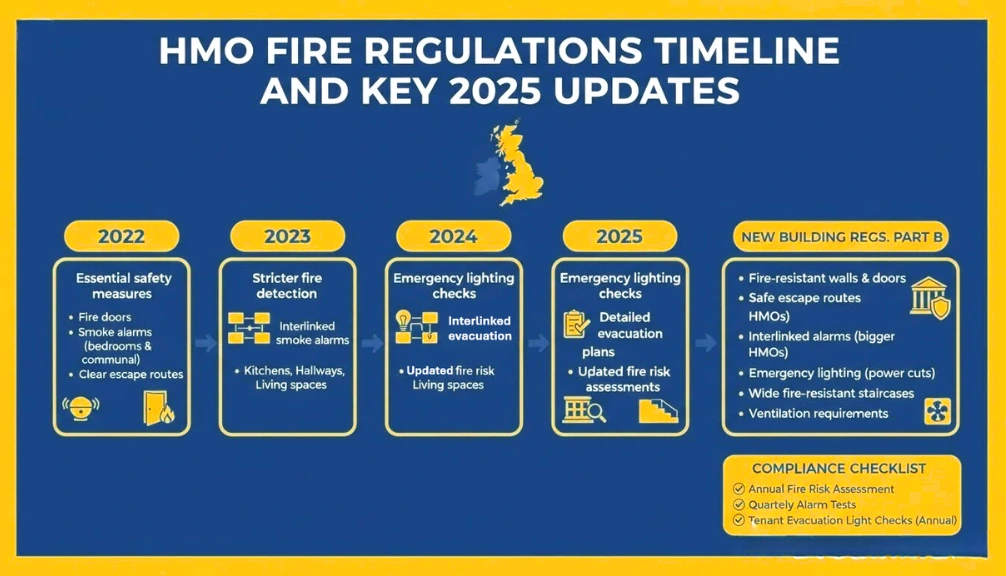
Fire safety regulations in 2025 protect tenants in HMOs and make sure landlords keep their properties safe. In 2025, HMO housing regulations set clear rules to keep shared homes safe and well-managed. These rules cover alarms, fire doors, escape routes, and firefighting equipment.
Key Updates from HMO Fire Regulations 2022 to 2024
In this section, we go through all the fire regulations for HMOs over the years. Let’s take a quick look at what changed from 2022 to 2024 in HMO fire regulations:
HMO fire regulations 2022 Focused on essential safety measures like fire doors, smoke alarms in every bedroom and communal area, and clear escape routes. Set the baseline for protecting tenants in shared houses.
HMO fire regulations 2023 Introduced stricter requirements for fire detection systems in shared kitchens, hallways, and living spaces. Required interlinked smoke alarms so that everyone is alerted quickly in case of fire.
HMO fire regulations 2024 Increased inspections and checks for emergency lighting. Introduced detailed evacuation plans, especially for larger HMOs with multiple floors and more tenants. Emphasized keeping fire risk assessments updated and reviewed regularly by a competent person.
The fire and rescue service carry out a fire risk inspection to make sure regulations apply in every building. New fire safety guidance and new regulations provide fire safety measures to protect everyone. Fire and rescue authority offers guidance on fire and helps reduce fire risk in houses of multiple occupation. Health and safety rating system checks the condition of your HMO license and evaluates safety in the common areas.
New Building Regulations for HMOs Explained
Let’s dive into building rules for HMOs and see what landlords need to do to keep tenants safe. Fire regulations for HMO properties in the UK fall under Building Regulations Part B 2010, and the 2025 update brings some important changes. Here are the key points:
Fire-resistant walls and doors:
Shared corridors, staircases, and escape routes must have walls and doors that resist fire. This helps slow fire and smoke from spreading.
Safe escape routes:
Exits need to stay clear and have signs or lights so tenants can leave quickly in an emergency.
Fire detection and alarms
Bigger HMOs need interconnected smoke alarms or fire alarm systems to alert all tenants. Smaller HMOs require alarms in bedrooms, kitchens, and hallways to meet safety standards.
Emergency lighting:
Hallways, staircases, and escape routes must have lights that work during a power cut so tenants can exit safely.
Staircases and ventilation:
Stairs need to be wide and made from fire-resistant materials. Kitchens and bathrooms require proper ventilation to reduce smoke and fire risk.
New builds and major renovations:
Any new HMO or renovation that changes the layout must follow Building Regulations Part B 2010. Councils inspect to make sure all fire safety rules are met and can take action if any measures are missing.
Maintenance and checks:
Fire doors, alarms, and emergency lighting must be checked regularly to make sure they work properly. Keeping records helps show compliance during council inspections.
Compliance Deadlines and Transition Periods
Fire Safety for landlords is something we all need to take seriously. New HMO fire rules have set deadlines and extra time to help landlords make changes. Here’s what you need to know about deadlines and transition periods for HMOs:
Existing HMOs must meet updated fire alarm and safety rules by 2025. Councils can check properties at any time to make sure everything is in place. New HMOs follow the latest fire safety and building regulations from day one. Transition periods give landlords some time to make minor upgrades, but safety cannot be compromised. Keep records of alarms, fire doors, emergency lights, and risk assessments. These show councils that you take fire safety seriously. Check regularly for any issues and fix them fast. This keeps tenants safe and avoids legal trouble.
Following these simple steps makes life easier for landlords and safer for everyone in the HMO.
HMO Regulations UK: Penalties, Enforcement and Staying Compliant
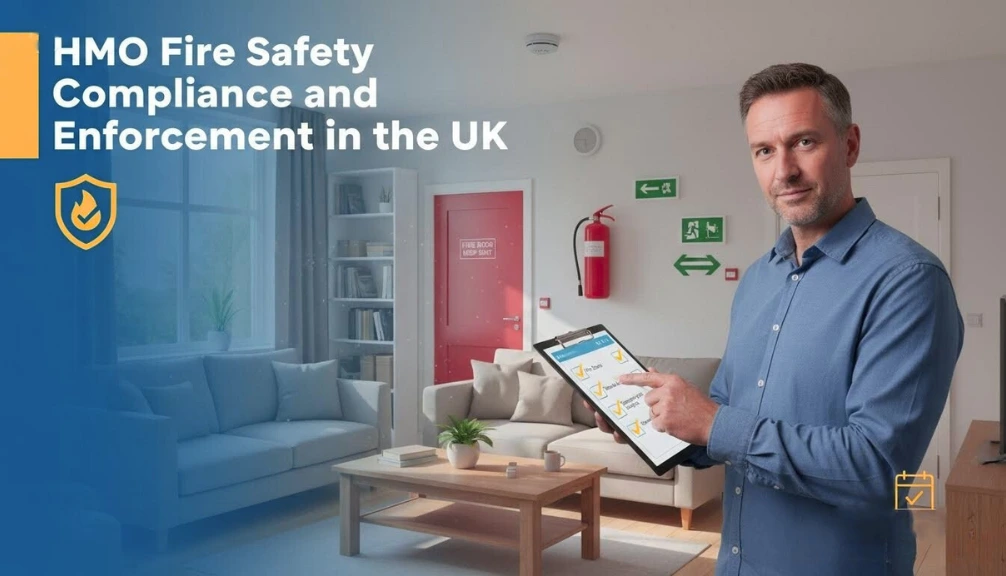
Managing an HMO means you have to take fire safety seriously. You need to know the rules, follow them, and understand the consequences if you don’t. Let’s dive into this.
Consequences of Non-Compliance with HMO Fire Safety Laws
Not following fire safety rules in your HMO can lead to serious problems. That’s why taking fire safety seriously protects tenants and keeps you safe from penalties. Here’s what can happen:
Fines from local authorities for breaking HMO regulations. Possible criminal charges if tenants are harmed. Requirement to make urgent repairs or improvements at your cost. Risk of the tenant’s insurance being invalid if fire safety rules are ignored. Damage to your reputation as a landlord makes it harder to rent out properties.
Local Authority Inspections and What to Expect
Local councils check HMOs to make sure they follow fire safety and licensing rules. Here’s what they expect:
Inspectors check fire doors, smoke alarms, and escape routes. They ask to see maintenance records and risk assessments. Notes are made of any issues that need fixing quickly. You get guidance on how to correct problems and stay compliant.
Creating a Fire Safety Compliance Checklist for Your HMO
A simple checklist makes fire safety much easier to handle and takes away a lot of stress. It shows you exactly what needs attention, keeps things organized, and makes sure nothing gets forgotten. Plus, it shows inspectors and tenants that you care about safety and are on top of the rules.
That’s why AllLandlordCertificates.co.uk provides a free checklist to help you follow each step easily and keep your property safe.
How to Conduct an HMO Fire Risk Assessment
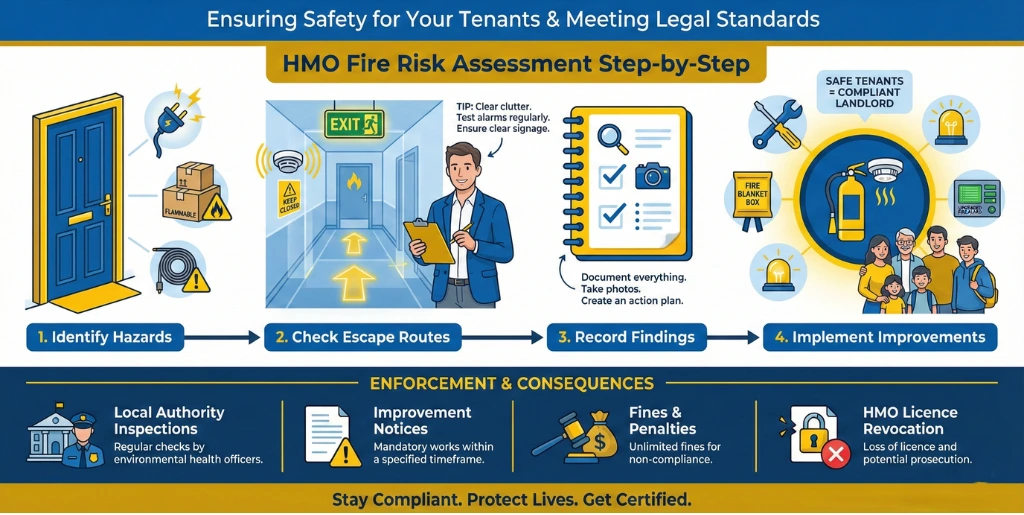
If you rent out a house in multiple occupation, safety comes first. Fire risk assessments are not paperwork, they protect your tenants and your property. Let’s break it down in a way that is easy to follow.
Step-by-Step Fire Risk Assessment Process for HMO Landlords
Let’s walk through this in simple steps, so you know exactly what to do to keep your HMO safe. Fire safety in multi-occupancy properties can feel tricky, but breaking it down into clear steps makes it much easier.
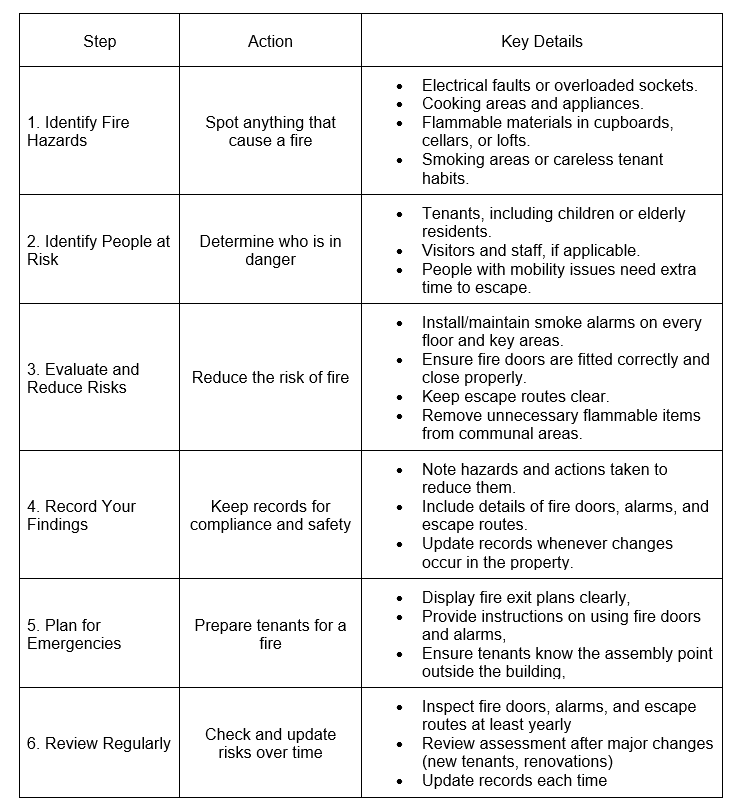
Identifying Fire Hazards in Multi-Occupancy Properties
Let’s spot what can cause fires in a shared property so you can take action before anything happens. In HMOs, there are specific places to check:
Electrical appliances and wiring
Check cookers, kettles, heaters, and any other electrical devices. Look for damaged wires, overloaded sockets, or faulty plugs.
Cooking areas
Keep kitchens clean and organized. Remove grease and crumbs that can catch fire and make sure appliances are in good order.
Smoking hazards
If tenants smoke, ensure it is in a safe space outside. Never allow smoking in bedrooms or communal areas.
Flammable materials
Store cleaning products, cardboard, paper, and other flammable items safely away from heat sources.
Blocked escape routes
Make sure hallways, corridors, and stairways are clear of clutter so everyone can leave quickly in an emergency.
Recording and Implementing Risk Assessment Findings
The Regulatory Reform (Fire Safety) Order 2005 law says landlords must keep a written record of the fire risk assessment. Recording your findings is as important as spotting hazards. This keeps tenants safe and shows you follow the law.
Write down everything
Note all hazards, areas checked, and actions needed in a simple, clear report.
Create an action plan
Decide which hazards require immediate attention and which can be scheduled later.
Share with tenants
Let tenants know escape plans, alarm locations, and how to act if a fire happens.
Review regularly
Recheck the property at least once a year or whenever there are changes like new tenants, renovations, or new appliances.
What Are the Essential Fire Safety Requirements for HMO Properties?
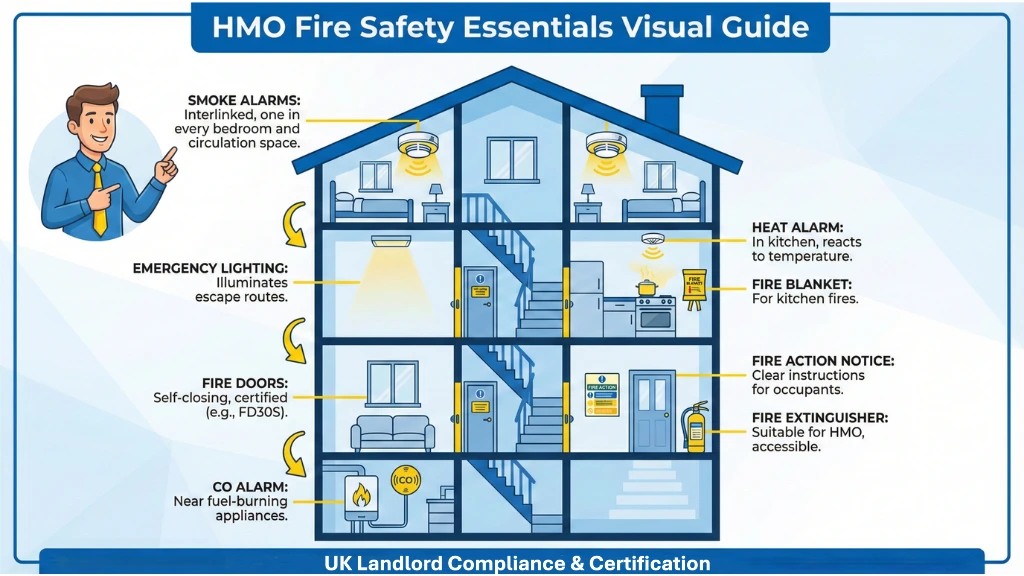
Let’s talk about the fire regulations for HMO properties. Keeping tenants safe is the top priority. The law in the UK sets clear standards to make sure everyone can escape safely if a fire starts. Here’s a simple guide for landlords and property managers.
Mandatory Fire Detection and Alarm Systems in HMOs
In an HMO, fire detection saves lives. Because it alerts people when a fire starts. HMOs need the right kind of fire detection installed. Here’s what to know: Larger HMOs (3+ storeys) need a Grade A, LD2 system. Hard-wired, interlinked smoke and heat detectors cover bedrooms, hallways, kitchens, and living areas. Alarm sound levels reach 65 dB(A) in rooms and 75 dB(A) at bed heads. Smaller HMOs can use Grade D, LD2 systems. Alarms can be mains-powered or battery-backed. Wireless alarms are allowed if certified to the right safety standards. All rooms and escape routes must have working detectors.
Fire safety in HMOs includes smoke detection and fire safety provisions to prevent the spread of fire. Conduct a fire risk assessment to reduce fire and ensure general fire safety. Certain safety steps include an alarm in any room and communal fire protections to keep residents safe in the event of a fire.
Emergency Lighting and Escape Route Standards
When it comes to fire safety, having clear and bright escape paths can save lives. Here’s what you need to know about emergency lighting for HMO escape routes:
Emergency lights must illuminate all escape routes, including corridors, stairs, and exits. Lights must comply with BS 5266–1 standards. Ensure backup power lasts long enough to cover an evacuation. Check lights regularly and replace faulty bulbs immediately. Escape routes must remain clear, unobstructed, and easy to follow at all times.
Fire Door Regulations and Installation Requirements for HMOs
Fire doors stop fire spreading and give tenants more time to escape. Here’s what you need for HMOs:
Install fire doors on all rooms leading to escape routes and communal areas. Doors must meet the FD30 standard, meaning they resist fire for 30 minutes. Fit self-closing devices to ensure doors shut automatically. Check doors for gaps, damage, or faulty hinges regularly. Keep door signage visible to show which doors are fire doors.
Fire safety checks for landlords help keep your HMO alarms, emergency lights, and escape routes ready in case of an emergency. Regular checks give you peace of mind and make sure tenants stay safe at all times.
Fire Safety Equipment Requirements: Alarms, Extinguishers and Testing
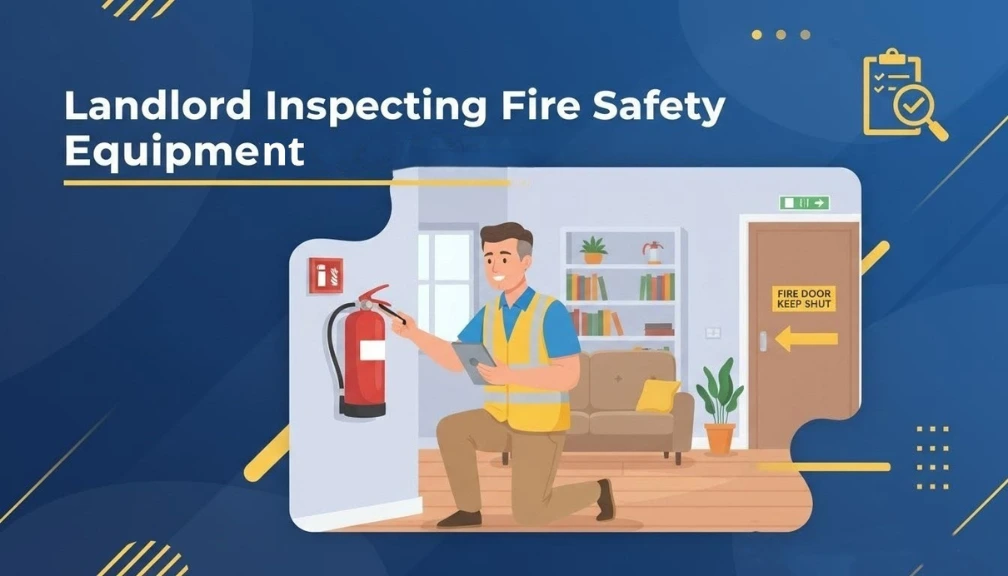
Now, we talk about fire safety equipment. Good safety gear keeps people safe and keeps your place in line with UK rules. After completing this section, you will know what equipment to have and how to care for it.
Choosing and Installing the Right Fire Extinguisher for HMO Properties
As a landlord, choosing the right extinguisher for an HMO keeps everyone safe in daily living. Each type handles a different fire risk, so a mix of units helps you to protect shared areas.
Types of Fire Extinguishers: Water (Class A): For fires involving solids like wood, paper, or textiles. CO₂ (Class B & Electrical): For flammable liquids and electrical equipment. Foam (Class A & B): Versatile for liquid and solid fires. Powder (ABC): Multipurpose, suitable for most fire types. Wet Chemical (Class F): Specifically for cooking oil and fat fires in kitchens.
Tips for installing extinguishers safely and legally in HMOs: Pick the right spots: Kitchens, hallways, and communal rooms are best. Make sure everyone can see and reach them easily. Follow instructions: Mount extinguishers at the height and way shown in the manufacturer’s guide. This keeps you compliant with UK fire safety rules. Add clear signs: A small sign above or near each extinguisher helps residents find it fast. Keep access clear: Don’t block extinguishers with furniture or boxes. Easy access saves time in an emergency. Secure properly: Make sure each extinguisher stays in place and cannot fall. Safe installation is required by law for HMOs.
HMO Fire Alarm Testing Frequencies and Documentation
Fire alarms in HMOs keep everyone safe, so checking them regularly is really important. A simple record helps you stay organized and meet UK fire safety rules. Here’s what to do:
Press the test button once a week, that’s it. Bring in a qualified engineer for a proper check once a year Keep a simple log of every test or repair, so nothing gets lost Fix problems straight away, don’t leave them for later Keep records safe, they help if an inspector drops by
Maintenance Schedules for Fire Safety Equipment
Looking after fire safety equipment keeps everyone safe and avoids last-minute worries.
Here’s an easy way to do it:
Do a quick look over each month to spot anything odd. Book a professional service once a year. Label everything with the last check date. Keep the area around alarms and extinguishers clear. Keep a checklist so nothing slips through.
Understanding HMO Fire Door Regulations and Compliance
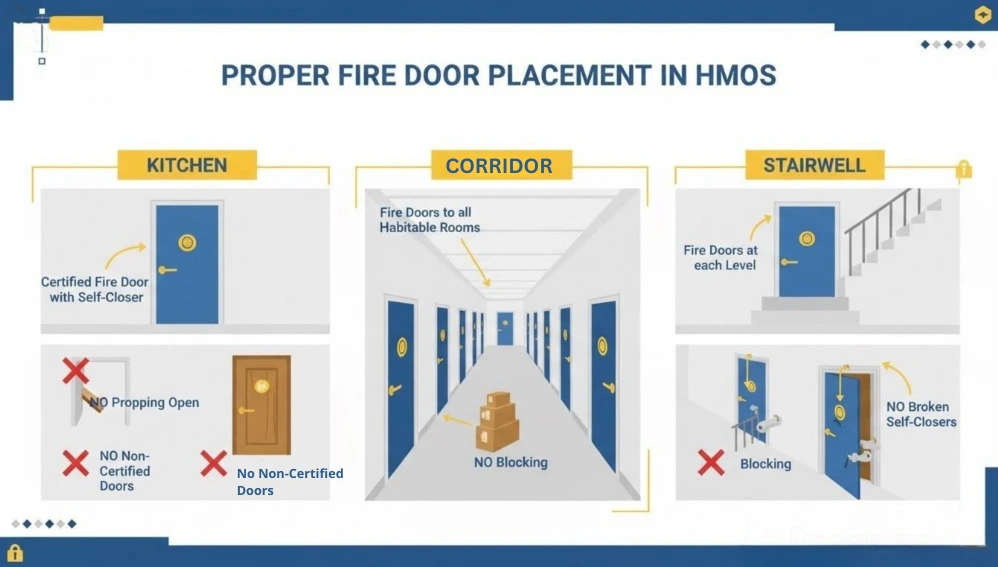
Fire doors play a big role in keeping people safe in HMO properties. They stop fire and smoke from spreading and give everyone inside time to leave safely. Knowing the rules makes it easier to follow the law and protect tenants. Let’s break it down.
Fire Door Specifications and Certification Requirements
Fire doors in HMO properties must meet clear standards to keep everyone safe.
Here is what you need to know:
Doors carry a fire-resistance rating like FD30 or FD60, showing they can resist fire for 30 or 60 minutes. Each door must have a certificate proving it meets the standards. This certificate comes from the manufacturer or installer. Frames, seals, and hinges must all match the door’s certification. Installing a certified door in the wrong frame can make it ineffective. Self-closing devices are essential. A door that does not close automatically will not stop smoke or flames. Regular checks help confirm the door is still in good condition. Look for cracks, warped wood, or missing seals.
Where Fire Doors Are Required in HMO Properties
As a landlord, you need to know where to install fire doors. Placing them in the correct locations helps protect tenants and slows the spread of fire through the property. In HMOs, fire doors are needed in several key areas:
Doors between individual flats or units and shared corridors Doors to staircases that lead to the building’s exits Doors separating kitchen areas from hallways or escape routes Doors to cellars, boiler rooms, or storage spaces that contain flammable materials
Common Fire Door Compliance Mistakes to Avoid
Some mistakes can make fire doors useless, even if they look correct. Avoid these to stay safe and legal:
Removing self-closing devices or propping doors open. Using non-certified doors in critical areas. Failing to maintain seals, hinges, or locks. Blocking escape routes with furniture or personal items. Ignoring regular inspections, which can catch small issues before they become dangerous.
Case study
Fire regulations for HMO properties are vital to protect tenants and landlords alike. Real-life examples show what happens when these rules are followed, and what can go wrong if they are ignored.
Grenfell Tower Fire Aftermath and HMO Fire Safety Impact
In June 2017, the tragic Grenfell Tower fire in London claimed 72 lives. While not an HMO, this disaster brought national attention to fire safety standards in all multi-occupancy properties, including HMOs. The incident led to stricter regulations and enforcement regarding fire doors, alarm systems, and escape routes in HMOs across the UK.
Key points from the Grenfell impact on HMOs:
Fire doors in HMOs must meet 30-minute fire resistance standards. Interlinked smoke alarms became mandatory in all new and existing HMOs. Local authorities increased fire risk assessments and inspections. Urgent upgrades demanded for cladding and escape route safety.
The tragedy reshaped fire safety laws and highlighted the critical importance of compliance in HMO properties nationwide.
Source: UK Government Grenfell Inquiry Reports
London Landlord Fined £20,000 for HMO Fire Safety Failures
In 2021, a London landlord was fined £20,000 after a Southwark council inspection found serious fire safety breaches in a 5-bedroom HMO. The property lacked working smoke alarms, fire doors were missing, and escape routes were blocked. No valid fire risk assessment was in place.
Actions and consequences: Fire risk assessment completed post-inspection. Installation of interlinked smoke alarms and fire doors. Clear signage and unobstructed escape routes were implemented. The landlord received a formal enforcement notice and financial penalty.
This case illustrates the legal and financial risks of ignoring fire regulations for HMOs in the UK.
Source: Southwark Council Fire Safety Enforcement Report, 2021
Wrap Up
Let’s wrap this up. Keeping your HMO safe doesn’t have to be difficult. Make sure your alarms, fire doors, and extinguishers are all working properly, and carry out regular HMO fire risk assessments. Following the Fire regulations for HMO properties keeps your property safe and your tenants protected.
If you want to make it even easier, head over to All Landlord Certificates to get the right certificates and keep your tenants safe and happy.